We’d all like to believe that divorce stops abuse, but post separation abuse is so common. The truth is, abusers don’t stop wanting power over their victims, even after divorce.
To learn if your ex-husband is continuing to abuse you after your separation or divorce, take my free emotional abuse test.
What Is Post Separation Abuse?
What is post separation abuse? Post-separation abuse refers to the continuation of emotional, financial, and psychological abuse by an ex-partner after a relationship has ended. It can manifest in various ways, often leaving the victim feeling trapped and stressed. Understanding and identifying the signs of post-separation abuse is crucial for taking steps towards healing and protection.
1. Financial Abuse
One common form of post-separation abuse is financial abuse. This can include your ex shutting down your bank account or refusing to pay for childcare and other essential expenses related to your children. Additionally, they withhold important financial information necessary for the divorce process. That is another tactic they use to exert control and cause distress.
2. Unauthorized Entry
Another form of post-separation abuse involves unauthorized entry into your personal spaces. Abusers may sneak into your car, garage, or home, violating agreed-upon boundaries. If you notice items out of place or signs of tampering with security systems, it is important to consult your attorney and possibly law enforcement to ensure your safety.
3. Manipulating Your Children’s Lives
Post-separation abuse can also include creating chaos for your children in order to exert control over you. Such as, refusing to adhere to set schedules or neglecting to take your children to extracurricular activities. They may also send subtly intimidating emails. They are difficult to pinpoint as dangerous. But they intend to cause fear and anxiety.
Get The Right Support while you are experiencing Post-separation abuse
At Betrayal Trauma Recovery, we recognize the difficulty of understanding post-separation abuse. And are dedicated to providing the support you need. Our community offers:
- Betrayal Trauma Recovery Group Sessions: Join one of our many group sessions for support, guidance, and understanding from women who have been through similar experiences.
- Betrayal Trauma Recovery Individual Sessions: Receive one-on-one attention and strategies tailored to your situation with our specially trained betrayal trauma coaches.
Why Choose Betrayal Trauma Recovery Group Sessions?
- Expert Support: Our professional coaches experienced personal betrayal trauma. They are equipped to help you find peace and protection for yourself and your family.
- Accessible & Affordable: For just $125 a month, you have access to over 92 group sessions—providing real support at the cost of just one therapy appointment.
- Immediate Help: Attend a group session within hours and start receiving the support you need today.
Take Action to Protect Yourself During Post-separation Abuse
You don’t have to face post-separation abuse alone. Betrayal Trauma Recovery is here to help you take the steps necessary to protect yourself and your children. Attend a group session today, and join a community that understands your struggles and supports your healing journey.
If you’re going through post-separation abuse, consider enrolling in The Betrayal Trauma Recovery Living Free Workshop to learn the secrets of why an ex would continue to cause chaos after divorce.
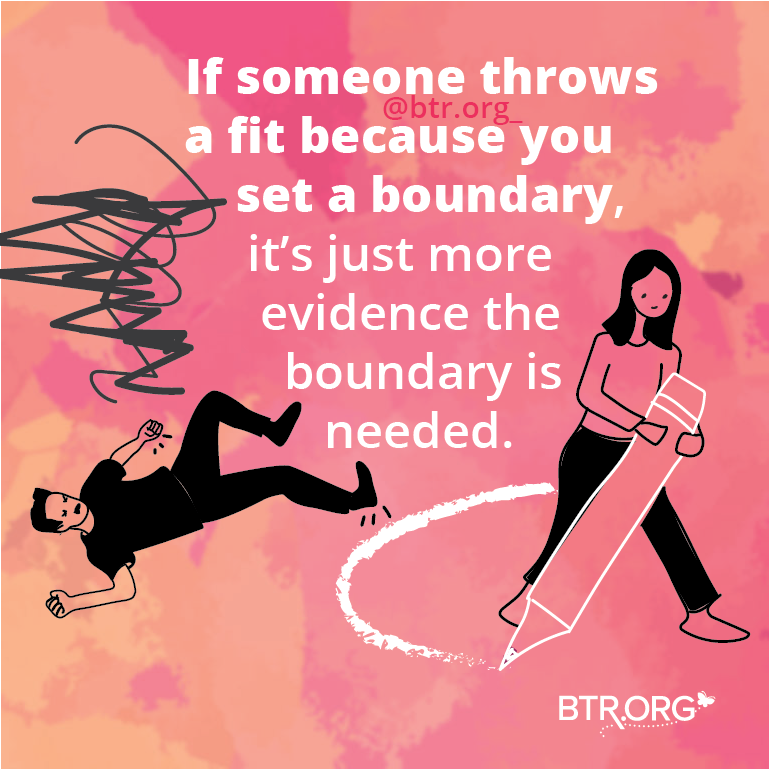
With Post Separation Abuse, Boundaries Are Key
Boundaries help victims separate themselves from abusive behavior. Boundaries are not:
- Ultimatums
- Consequences for bad behavior
- Mechanisms to control another person’s behavior
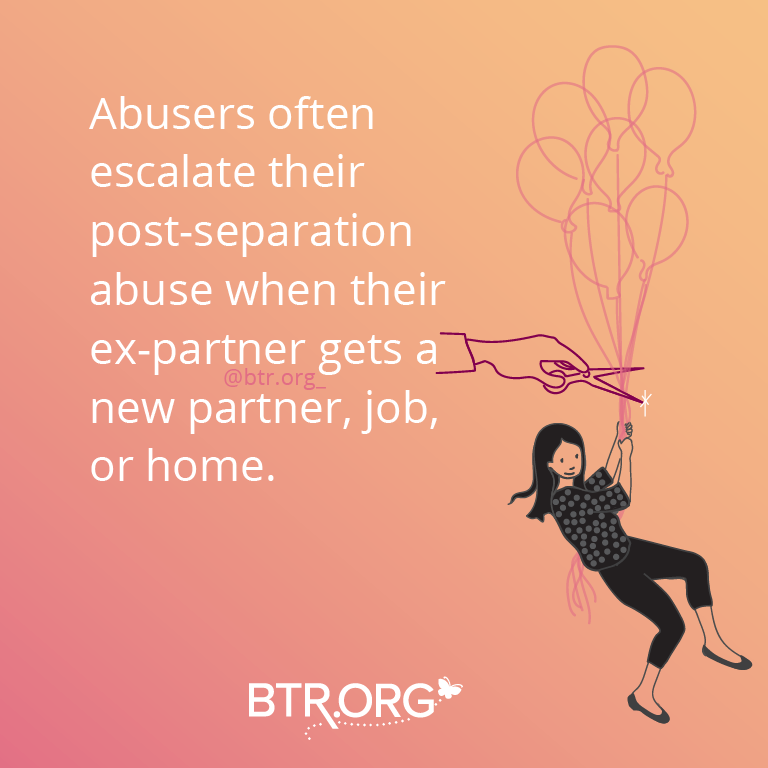
Instead, boundaries are courageous actions that victims take to ensure they are as protected as possible from harm. Setting and maintaining boundaries in a divorce is key to navigating post separation abuse.
What Are Some Boundaries That Can Help Me Navigate Post Separation Abuse?
Remember that post-separation abuse boundaries aren’t going to stop your abuser from being abusive, but they are intended to limit your exposure to your ex-husband’s abusiveness.
Some ideas of boundaries you can set and maintain include:
- Using a parenting communication app, like Our Family Wizard, as your sole mode of communication (consult with your attorney).
- Determining certain times of day, or days of the week, that you will check and respond to messages from your ex
- Bringing a family member or friend with you to drop off/pick up the children
A Strong Support System Is Essential When Navigating Post Separation Abuse
Post-separation abuse can sometimes feel overwhelming. It’s imperative that victims develop a strong support network.
Post separation abuse victims can find support from:
- Safe family members
- The Betrayal Trauma Recovery Group
- Trauma-informed specialists, like Betrayal Trauma Recovery Coaches
Transcript: The Truth About Post Separation Abuse
Anne: What is post-separation abuse? Marcie’s here to tell her story. We’ll talk about the post-separation abuse she experienced since her divorce. Welcome Marcie
Marcie: Hi.
Anne: Can you start at the beginning of your story?
Marcie: Before that, I’d like to share a funny story. This was when we had originally separated. I tried to send something to my husband to help him understand the situation. It happened to be something from you. And I didn’t know it was from you at the time. It just resonated with me, and I thought it would help.
And since that time in all his communication, he references you as this horrible person trying to break up families. And do horrible things for women.
Early Relationship Dynamics
Marcie: And I feel like it’s ironic that now I’m actually part of that community and maybe helping other women in bad situations, like I was and currently still am.
Anne: So he introduced you to Betrayal Trauma Recovery?
Marcie: Well, I saw something I read and didn’t know it was Betrayal Trauma Recovery.
Anne: And then you showed him, like, hey …
Marcie: Yeah.
Anne: … this will help you be a better person.
Marcie: Yes.
Anne: And since then, I am the devil.
Marcie: Of course.
Anne: And it’s my fault that you’re setting boundaries, rather than his abuse, of course.
Marcie: Yes.
Anne: I get that a lot, no worries. I’m happy to take that heat for you. So talk about the beginning.
Marcie: I met him in high school, and I was young. It was actually before I started high school, so I was very inexperienced with relationships or this type of behavior. And at the beginning, like most of us, it doesn’t start feeling wrong, it starts feeling great. This person is loving. I misunderstood controlling things as loving things.
Like, oh, you shouldn’t do that with your friend. That might not be safe for you, but it was a controlling issue. Then we married fairly young and had kids. Then a lot of these things that now I look back with eyes open and see were wrong or damaging. I was told this is normal, I’m crazy, and all the typical things that most of us hear in these situations.
And then we feel like, well, that must be true. It must be us.

Appeasing Him
Marcie: I am now, in my fifties. Our relationship started when I was 14 and we married when I was 21. I feel like it took me a long time to realize that it was such a problem. But I basically tried to appease him in every way possible, because when I didn’t, it was miserable. So that happened for a long time. And then there was the fear of not appeasing him or doing things his way.
Anne: So back then, you were doing that to protect yourself.
Marcie: Absolutely.
Anne: You didn’t know that you were resisting back then, but that was a form of resistance, trying to get it to stop.
Marcie: Absolutely, I felt like if I was what he wanted me to be, then it would stop. And of course, in whatever discussions we had about it, or arguments, it was usually my fault. Whatever reaction I was getting was because I wasn’t doing something right. Or I wasn’t being what he needed me to be. So I kept trying to resist his behavior by doing whatever I could to be the best wife I could be.
I literally ran myself ragged trying, but it was impossible. And it never really made things better.
Anne: Hmm, when did you notice that wasn’t improving things for you?
Marcie: I noticed it a long time ago. But I just kept trying, because I didn’t know what my options were. And the longer it went on, I think the more I felt like it was my fault that I couldn’t be what he needed. He kept telling me that, or that I was crazy.
Understanding Post Separation Abuse
Marcie: There was one point where he, this was quite a while ago, like at least 20 years ago. He said I needed antidepressants because I was hard to deal with. Before I actually left, I realized, of course, I was depressed. I lived with someone who made it impossible to function. He made it impossible to have any type of normal life. He constantly made me feel like I was inadequate, horrible, or bad at everything I did.
It was confusing. And honestly, I didn’t have much time to think about how I felt, because I was the sole financial provider for our family of eight. And I worked a lot, plus I had all the responsibilities at home. I attributed it to my busyness. Or that, I don’t know, I didn’t have much chance to think about how I was feeling. When I realized I was depressed, we tried therapy. It doesn’t work in abusive situations.
And the therapist we went to was horrible, because he wouldn’t let me talk about the past. He felt like I’m going to fix this and this magical person who’s going to fix your relationship. We’re going to build from right now, and we’re not going to go into the past at all. And that was really empowering to my ex husband, because he didn’t want to talk about the past either.
There was actually discussion before I went to the therapist about, you can’t talk about certain things. And I told him, well, if we don’t talk about those things, that are some of the major issues. How will we resolve our problems? And I couldn’t say certain things without fear of what the reaction would be when we returned home.
Therapy & Depression
Marcie: And the therapist would not allow me to speak. And we did have a test. There were a bunch of questions that we were both supposed to fill out. I answered things honestly, and it came back that I was depressed. He mocked me for that, made fun of me for that. And it just emphasized that I was the problem because I was depressed. It emphasized his impression that it was my fault, and yeah, I couldn’t handle everything.
Anne: He’s like, you’re going to work full time and take care of these kids full time. Your depression is causing me problems because dinner’s not on the table. He’s an exploitative person with an exploitative character. One of the things I want women to think about is what do they want? What is the goal of him telling you that you’re depressed? Is it to get you to work harder? Or is it to get you to feel bad about yourself? Is it to get you to stop trying to get him to do something?
They usually have something in mind that they’re trying to accomplish. In your case, I think he probably worried you might find out who he was, because he relied on you for everything.
Marcie: I definitely believe that was the case. That was towards the end of our, I don’t know if you could call it a relationship, whatever it was. And I had started to question him a lot more. I had started to say no a lot more, which, by the way, for anybody before they get into a relationship, there’s a simple test.
The “No” Test, Manipulation & Control
Marcie: It’s the ‘no” test. You say no to something and see how they react. And that’s the simplest, easiest way to figure out how people react. But I started saying no. And of course, I became more problematic. I became more difficult.
Anne: He wanted you to continue to say yes. So he’s manipulative when he says, that’s why you’re saying no. Because you’re certainly not saying no, because it’s an unreasonable request I’m making.
Marcie: Most of us in this situation experience the fact. That the way we do things for them, the way we bend over backwards to make them happy, they love. It’s not a problem for them at all. So they have a hard time seeing that there’s a problem in a relationship, because for them, they get what they want. And if they don’t, they throw a fit, and then usually they do.
Anne: It’s working for them. If they can scare you enough or manipulate you enough, the victim resists this type of behavior by doing what he wants. They think that will reduce the behavior, he’s happy about that. She’s still resisting the abuse, and still trying to make things better.
She’s always trying to improve her situation. And if she’s trying to improve it by being like, if I do this, he won’t get mad at me. Or if I do this, it’ll improve things. Then he’s like, cool. But he’s not thinking about you. He’s not thinking about your feelings. He’s just trying to get what he wants out of the situation.
What Is Post Separation Abuse: Recording Conversations To Maintain clarity
Marcie: Absolutely, that depression thing was such a small slice of, there’s gotta be something wrong with me. I started recording things to help me realize that I wasn’t crazy. At first, the only reason why I recorded was he keeps telling me something that didn’t happen. Or he keeps telling me that this conversation didn’t go the way that it did. We’d had circular arguments about well, yes, you said this and this is what you said.
“No, I didn’t, I never said that. You’re wrong. See, you can’t remember things correctly. Your brain doesn’t work,” all those negative things that would make me go, what’s wrong with me? Why am I remembering these things incorrectly, or why am I remembering it differently from what he said? And in my mind, I know it went that way. So the only way I could confirm that in my brain was to record the conversations.
I want to emphasize how dangerous recording can be if he found out. Because he doesn’t want that, doesn’t want to be contradicted. I started feeling empowered when I realized I’m not crazy. I’m not making this up. Sometimes he accused me of like screaming and yelling at him, and I’d listen to it.
I’m like, well, I didn’t scream and yell or this didn’t happen. Whatever it was, it confirmed that what he was saying wasn’t true. And it was so helpful for me to start seeing this as abuse or to see that, there was a problem.
Anne: Yeah, that’s very brave of you. And also really awesome.
Journaling & Trauma Response
Anne: When I went through it, one of the things I did for a very short time was write in my journal, good days and bad days. Because in my head, I thought, okay, he’s just wonky three days a month. And I did the math and I was like, oh, that’s only 10 percent of a month. Is three out of 30 in an ideal marriage, 27 days and 3 days a bad marriage. Is three days worth it?
And I did these calculations, but when I actually wrote it down, it was happening every day. I just didn’t notice it was happening every day when I wasn’t tracking it. Recording it or journaling is so helpful.
Marcie: I also journaled and feel like that was tremendously helpful. I did that before I started recording. Like what you said, to get an idea of what was happening. Quite a few years ago, I actually had called to get help for him because he threatened suicide. If I didn’t do things his way, he threatened suicide.
And so I called for help for him. They referred to someone else, and they told me about power and control wheel. Which helped me understand this too. But I also went to a therapist at that time. And I expressed to her, we’ll have these horrible arguments in the evening. And then the next day I cannot remember them.
I can’t remember what they were about. It’s like, I can’t remember anything, no matter how hard I tried. And she explained to me that that is a trauma response to help you function.

Living In Between Horrible Things
Marcie: She basically explained it to me, as if you remember these difficult situations, you might not be able to function the next day. And so that’s a trauma response. So writing them down is hard, because you have to address them. But then, like what you said, you thought it was only three times a month when it was every day. I think our brains want us to forget the horrible things, so we do.
Anne: Well, and also, the next day he seems normal, at least in my experience. I thought, well, maybe I’m crazy. He seems fine today. It wasn’t like the next day he woke up and he was terrible. He acted fine. That made it confusing too like thinking, oh, it’s fine.
In those times where you feel desperate for help, that’s a great time to take action. To call a local domestic violence shelter, or attend a Betrayal Trauma Recovery group session in that moment. Because you often let it sit for a minute, and then things seem fine, and it doesn’t seem weird to you until it happens again. So you’re always living in between.
Marcie: That’s making sense. The only thing is for myself and my situation, I had a fear to reach out for help. Which probably a lot of us do. I just intuitively knew that would be crossing a line of his, which would send him into a negative way.
Confronting the reality of Abuse
Marcie: And there was a time when we had this situation. Where he chased me through the house and backed me into a corner. I put my hands up, and he was so close to me that my hands were on his chest. And I said, you need to leave me alone. And after that happened, I don’t remember how it ended. But he kept telling me that I had put my hands on him, and he could call the police and say I assaulted him. Because I put my hands on him and he didn’t touch me at all.
I was trying to explain to him how that doesn’t sound right. It wasn’t the case, and he said you could call anybody and they would side with me. It was just another typical thing that he would say, how other people would feel about certain situations. And so I said, okay, well then let’s call the domestic abuse hotline right now. And he’s like, go ahead, call. He didn’t think I would call, but I did. They immediately told me, this is not a safe situation. This is not good.
But after that call, he was angrier with me than I’ve ever seen him. He explained it to me as the biggest betrayal he has ever felt from me. It was worse than if I had an affair. And I feel like that was because being found out or proved wrong was the worst thing he could experience.
Anne: Or he’s just lying in that moment.
Marcie: Or lying.
Anne: To make you feel like he feels super betrayed for you calling the domestic violence shelter, in order to intimidate you.
Marcie: Yes.
Lies & Recording Conversations
Anne: They lie so much that it’s hard to be like, yeah, that was so devastating for him. Because he told me, I’m thinking, was it? Was it devastating for him? Because he’s a liar. We just never know what is going on in their minds, since they lie so much.
Marcie: Well, in looking back, there are so many things that are lies that I didn’t see as lies. Or didn’t want to see as lies or didn’t want to believe as lies that now I know. But that brings me back to the beauty of recording. So flash forward many years from that, that first original recording to now, where four years ago. I got a restraining order, which allowed me to record conversations between him and me, or him and the children.
It’s specific for victims of domestic violence who have a restraining order. To record, so I could record and use those recordings in court.
Anne: Did he know that you were allowed to do this?
Marcie: Yes.
Anne: Okay, so he knows he’s being recorded?
Marcie: He knows he’s being recorded, but I don’t know if most of these people are like this. He’s very cocky. I think he’d forget, too. Or he didn’t care or didn’t think what he was saying was wrong. In fact, at the beginning, he definitely didn’t think what he was saying was wrong. There were recordings from when he had phone calls and supervised visits. And these were during those phone calls, and he felt okay, because this was the way he was feeling.
Differences Between Counties Dealing With Custody
Marcie: So it was a right for him to let them know. But when I transcribed those recordings, things such as your mother is trying to kill me by doing this, and your mother hates me. And just things that were not appropriate for children to hear.
Anne: You’re recording his phone calls with your kids. This is one way to combat his abuse when fighting a narcissist for custody.
Marcie: Correct, and this has been going on for four years. In the meantime, because of those recorded conversations, they’ve limited his phone calls to a shorter amount of time. As well as took away the supervised visits. Which he wasn’t doing anyway, because when I stopped planning them for him, it was too much work or whatever. I don’t know. He didn’t want to pay for it, but he didn’t do it, but they took away that right and made it just phone calls.
But another important thing for people in the situation to know is that. The county in which you reside is the court where your custody issues will be heard. And I don’t know if that’s in all states, but I know in California, that’s the issue. So there are many counties that understand domestic abuse. And they try to understand that dynamic when they make decisions regarding the children.
There are other counties that do not understand that dynamic. They tend to feel that both parents should be with the children no matter what. And they don’t take into account the background or danger. So for many women who are having some big challenges within the court system, that if they live in another county, they might get a different viewpoint and a different result.
Post Separation Abuse INcludes legal maniplulation
Marcie: I’ve also experienced, legal abuse where he keeps going back to court.
Anne: His post separation abuse includes him taking you back to court, even though you’re divorced and even though he has a protective order? Is his protective order still in place?
Marcie: It was made permanent. But in his communication with me previously, he threatened me that he’s going to keep going to court. He has said, this is the only thing you understand. And he’s been in contempt in some ways that have caused me to respond to things worse that have cost me money.
Anne: Yeah, it’s so frustrating that they can wreak so much havoc, and the court system doesn’t stop them. It’s a very difficult situation, and that’s why strategy, I think, is so important. And why I created The Betrayal Trauma Recovery Living Free Workshop. Because confronting them or communicating better, or all the things the therapist might tell you.
Or a guardian ad litem might tell you, or reunification therapists will tell you, do not work. So many of you have experienced the trauma of all that. And strategy, we found, is the only thing that can help us stay sane.
Financial Manipulation
Anne: I mean, he’s costing you all this money. Since you were the primary breadwinner, did he actually start working?
Marcie: No.
Anne: So he’s doing legal abuse, how is he paying for his legal stuff?
Marcie: He keeps saying he’s borrowing money, but I know he’s getting it from family members. It’s just his way. He always has people take care of him or pay for him. And it ties into his narrative of how he will describe what’s happening and make me the villain.
Anne: To place him in the victim role.
Marcie: Yes.
Anne: Rather than the perpetrator. You were the primary breadwinner, did he get alimony from you?
Marcie: No.
Anne: Whew, he’s probably mad about that. He lost his meal ticket.
Marcie: He did.
Anne: Yeah, I bet that’s the thing that’s the most anger producing for him.
Marcie: Yeah.
Anne: You’re not good for anything now.
Marcie: I am useless.
Anne: Yeah, you’re completely useless to him. That’s what we want to be, we want to be useless.
Marcie: Yes.
Anne: To these guys. Let’s talk about the smear campaign he started. Smear campaigns are common with post separation abuse. Was this, I guess, during your divorce proceedings?
Smear Campaign
Marcie: Yes, all along, he leaves out small details, sometimes large details. Or sometimes totally represents things differently from how they are to be the victim. And when I originally contacted you, I asked how do you deal with the smear campaign. This is happening with my in-laws, and it was so upsetting to me to feel like I had lost my in-laws. I’m sure many women have felt the same feeling. I’ve known them since I was a teenager.
I feel like they thought of me like a daughter, and the ironic part is they knew how he was. Not to the extent of what I knew, but they knew, and several times his dad said, I’m sorry he’s acting that way. I don’t know why he behaves that way to you sometimes, it doesn’t sound right.
His mom would say similar things, things like, if he keeps treating the children that way, they’re not going to want to talk to him. They knew how he was. He would treat them that same way, but they don’t want to talk to me. My adult children have refused to talk to their father, and they feel like that’s horrible. His post separation abuse includes his lies to everyone about me.
They don’t interact with them. They barely interact with their younger grandchildren anymore. And it’s just sad, but at first it was really, really upsetting. And then I realized, well, if they’re believing him. If they’re going to stand beside him when he’s abusive and believe things that aren’t true. I guess it has to be okay that those people aren’t in my life anymore.
What Is Post Separation Abuse: False Memories & Manipulation
Marcie: Oh, that’s so hard. So, on the phone calls with the kids, he tells them things that aren’t true. Well, gosh, there are so many things that he does to them that I feel are so damaging for them. They’re not small, tiny children, but still. He plants false memories. Do you remember when we did this together, and this together? Or I have the memory of whatever it was, being miserable because he didn’t want to go, or they weren’t behaving,
Like, for instance, my youngest is 12 and my oldest is 31. My ex-husband was really into baseball. He played when he was a kid. None of the kids had done any type of baseball or organized sports. The younger children wanted to, but weren’t able to when we were together. There was always an excuse we’re not going to have time, whatever. But after I left, it was the first time my youngest son was enrolled in Little League, and he loved it.
My ex husband kept saying, remember when we used to go outside and play baseball all the time? I always wanted you to be in sports, but it couldn’t work because of mom’s schedule.
Anne: It’s your mom’s fault that you couldn’t take baseball. Yeah, Um hmm. That’s one example of manipulation being a tactic of post separation abuse. Your ex is using the kids to hurt you.
Marcie: And I think, well, before I would have fallen into that and felt the guilt. But now I think, well, okay, if it was my fault, then how come I did that after I left you? But I couldn’t do it when there were two people in the home?
Impact On Children
Marcie: It was so much harder to do anything. But just the false memories of, we used to go out and play catch all the time, which is not true. A lot of those type of things. The criminal things or the things he did to break the restraining order. There were so many more things, but they don’t address it in the way you’d like. Let’s put it that way.
But I don’t talk to the kids about the court cases or anything like that, because I feel it’s not for them to be concerned about it. I don’t want them to be part of that. But he would tell them incorrect information about what they’re about, leave out all the important things, and tell them that Mom’s doing this because she doesn’t want me to see you. Those types of things damaged my relationship with the children.
Anne: And that’s the point. He’s purposefully doing that to do damage. It damages you and the kids, and that is the intent of post separation abuse, which is so unfortunate.
Marcie: It is very hard. Only two out of six of my children will speak with him. Of the two that do, that’s obviously where it’s the most damaging. I’m having trouble with my 17 year old because he’s trying to be the cool dad. He’s encouraging him to stay out late on school nights, not with friends, but with him, and he’s missed school. And he’s actually not supposed to see him, but that’s another thing. He’s luring them with being able to buy them things.
Anne: Does he have a job now?
Marcie: No, he does not. He gets money from family members, and he claims to be homeless. Yet he purchases things for them.
Processing The Abuse
Marcie: That’s where recording comes in wonderfully, because we do have a court case that he started. He wants custody again. And I think this time I’m including a lot of recordings that I’ve transcribed, which has been helpful.
Anne: It started when you were 14, and has continued this whole time, and everything he’s done has been part of that con. And he continues to do that con. You are experiencing post separation abuse. He lies to your kids, and he lies to everybody else. So the whole thing has been the show. So if you can think of it in that overarching way of, it’s been this show. And then, how do you tell the story within that con? That might help you process it.
Marcie: When you put it in that sense, it is just a continuous con. He’s just reaching and grabbing for different cons that will work. That helps put it in perspective.
Anne: Yeah, because he’s doing the same thing over and over. Even though it’s maybe not the same lie. It’s lying in a different way, but it’s still just lying.
Marcie: Looking back at it, it feels so surreal. Like it feels like it’s not real because it’s so insane. Does that make sense?
Anne: Um hmm, totally.
Marcie: And I feel like people aren’t going to believe me, because how could that be true? How could anyone act like that? Plus, he’s saying something different. So I think I still have a lot of healing to do, which is frustrating.
What Is Post Separation Abuse: We can help you understand
Anne: That’s the purpose of this podcast. It’s a safe place where everybody gets it and believes you. We don’t care what he says or thinks, we know he’s a liar. Here, you’re 100% believed. What is post separation abuse? We know and can help. So because of that, it’s such a safe place to be. Like, I can share my story, and he’s not going to talk back to me.
Marcie: Sometimes when you share your story with people who don’t understand, they back away or it’s just too much.
Anne: With me, I’m like, tell me more. So thank you so much, Marcie.
Marcie: Thank you so much.
Anne: I’m so excited to have another member of our community on today’s episode. We’re going to call her Mykell. She’s a single mother of three and believes women can discover a life of peace, power and purpose post separation. Even if they’re experiencing post separation abuse. Welcome Mykell.
Mykell: Thank you so much for having me. I’m so glad to talk to you.
Anne: Your story is similar to so many of our stories where you didn’t know that you were being abused. And you figured it out. Can you tell us your story?
Mykell: For me, the story is a slow unfolding one. I met my ex-husband when I was in high school. Anybody who knew us could say that our relationship had been rocky from the start. Me, being 17 years old and not knowing much about myself or relationship dynamics. I just thought, all relationships are hard, and I’m not perfect either.

And gradually over the years and decades, as things unfolded. It became clear that there was a spiritual separation in our relationship. As he continued to make various choices. It got rockier, and the thing that’s confusing in these situations is I’m not a shrinking violet.
So when someone consistently attacks you, sometimes you will stand up for yourself, you’ll fight back. So that’s what kept things confusing for me for a long time. Going round and around and around was this thought that I’m participating in how this relationship is shaping up. As time went on, I started to say, I don’t want to respond this way anymore. I don’t want to live my life like this anymore.
Seeking Help
Mykell: And I started seeking some counseling on my own, and in the midst of that, the relationship actually got worse. So in the midst of me choosing to disengage and better ways of handling my own emotions in the situation. It made it clear that we were on two separate paths. As life continued to go on, there were some choices he made that eventually were deal breakers and broke everything apart.
I started getting language for what I was going through, and started getting clarity. It’s been three years since the marriage ended, but now through the community to connect with other women who are going through the same things. I started that healing process. And get help with post separation abuse.

Anne: What brought you to understand that what you experienced was abuse? This it wasn’t just that marriage is hard work. Overall, you were realizing, wait a minute, these behaviors I’m seeing in him are unhealthy, the healthier you got. But what actually helped you consider abuse?
Mykell: For me, it was this thought that someday we’re going to get better. I don’t want everybody to know all this garbage that we’re going through. It’s going to be fine. I don’t want to involve too many people in this. As the waters started to get murkier, I needed some help. I went to a counselor about a totally separate issue. It started to unravel as I explained to her, well, this happened, and then he said this and yada, yada, yada. She said to me, you know, this is abuse, right?
And I thought to myself, really? In that moment, I don’t know that I fully grabbed onto what she was saying. But I started reading some books, and in reading, I started seeing my story in what these experts were writing about.
Recognizing Abuse Patterns
Mykell: And I thought, how did I ever miss this? And I think one of the barriers for us is feeling foolish that I never saw this. We think we’re going to see this thing coming from a mile away, and it’s going to be so obvious that we’re going to know. But so often something feels off, but you probably would not put that word abuse to it. You’d probably say this person has anger issues or this person had trauma in their backstory or …
Anne: They have an addiction.
Mykell: Yep, mm hmm, it’s something that we end up couching underneath this banner of imperfection that we all have. Not realizing that the power dynamics are intentional, that there’s more than just some bad habits going on here, that there’s something bigger at play.

That was one of the things that helped me disengaging emotionally and starting to heal. I said, I didn’t want to be part of that kind of thing anymore. And so that was how the road started to get to being healthy. It became so clear that we had different intentions about the way that was all going to happen.
Anne: Different ways of viewing the relationship. You were viewing it as a partnership, and he’s viewing it as I have power over, essentially. Which continues with post separation abuse. Especially if they’re doing an in-home separation.
Mykell: Mm hmm, I hesitate to say relationship, because one person certainly thinks they’re in a two-way relationship. But the only way this sort of arrangement continues is when there’s a disparity, and one of the parties is seeing this as a means to an end.
Post Separation Abuse: Power Dynamics In Relationships
Anne: He has some goal is controlling the information. For example, there’s a power differential because they have more information than someone else. Before you ever defined it as abuse, did you define it as a addiction?
Mykell: This was something completely. under the radar for me. I was not even aware of all the things going on. Some behaviors and things unbeknownst to me started to come out in the midst of that process. But there was nothing before. That was like a precursor.
Anne: So you were like, something is wrong, but you couldn’t put your finger on it. And the abuse came first. And then later you realized, Oh, and he’s also using pornography. That’s important to talk about, because so many people don’t include the this when they talk about abuse. And I always want to bring it into the story to say, and there was an issue here. So people know it is part of this mess of unhealthiness.
Mykell: Yeah, and I think the thing we have to recognize with the mess of unhealthiness. There are so many types of abuse when you’re looking at the classification of what’s domestic violence. So often we think that’s only physical. And there’s emotional, there’s sexual, there’s spiritual, financial, so many ways that someone can gain power over another person.
And often it’s not even just one or two. It often covers all these categories, and so because it can be very encompassing, it makes it hard to see.
Anne: Yeah, if it were just he’s absolutely shutting down the bank account and won’t let you have any money. That might be a little more obvious. Especially with post separation abuse.
Challenges of Co-Parenting
Anne: But the little ways he’s financially abusive, or if he said God told me I can beat you up. You’d be like, well, that’s clear it’s spiritual abuse. But it’s unclear if it’s spiritual abuse if he’s kneeling down and praying by you and saying, please help my wife be more godly. Help her understand how to be a better wife, when biblical submission becomes abuse. That doesn’t necessarily feel like spiritual abuse. From your experience, what issues do single mothers commonly encounter when raising children with an abuser?
Now, when I say raising them with an abuser, meaning you’re divorced from them, but they’re still in your life because they’re your child’s parent.
Mykell: Right, one of the difficult things is constantly trying to explain things to your former partner or trying to make decisions with them. As though they can have effective, honest, open communication. So often, it’s just a continued open door for manipulation and control to continue with post separation abuse. It is so essential to understand that it is possible to continue this walk without continually having to hand your life back over to this person.
Anne: Even if you’re expertly skilled at dealing with your ex, and you’ve got great boundaries. And you’re detached and you have all the skills going for you. Your ex can still technically abuse you because you’re being lied to, you’re being manipulated. It’s still not your fault if you don’t “communicate perfectly” with your abuser. He’s abusing you. You can do your best to be as highly skilled as possible in communication with an abuser.
But it still has nothing to do with you, and it’s not your fault if they still don’t react well to whatever you try. I struggled with post-separation abuse for eight years after divorce.
Living Free Workshop
Anne: Until I found the strategies that really, really worked, and was able to completely.deliver myself and my kids. I put those strategies in The Betrayal Trauma Recovery Living Free Workshop.
It saved me, it absolutely saved me. I mentored five different women to ensure that these strategies worked. And those women’s actual real life messages are in that workshop.
Mykell: Yep, having specific tactics is great, and also having a certain mindset. So if this person has lied to you, manipulated you, you can expect that’s still happening.
Post Separation Abuse: Use Our Family Wizard
Mykell: What you do in your communication is limit the opportunities for that to occur. I’m not going to get into the emotions or reason, or I don’t like that you did that. Not having to get too deep into the weeds. When you’re getting stuff hurled at you, absolutely have those safe people you’re like, I can’t believe this happened. They can help you work through the frustration, disappointment and hurt that is necessary.
It makes it easy to say, okay, I’m only gonna show what needs to be forward facing to this person. In terms of the logistic side of this. But when it comes to all my emotional stuff, I’ve got safe people, and I know where to get the support I need.
Depending on your situation, it may cause things to get a little riled up. For a while, they want to see if they can get a reaction from you. But over time, if you’re consistent and don’t offer reactions, and we’re not trying to be friends. Then it can get to a workable place in many instances.
Anne: So for a long time on the podcast, I touted no contact, which I did through my father, and that worked, and I was like, everybody should do this. But then I had a custody case that I lost. In the process, I needed to switch to Our Family Wizard, rather than go through my dad, so that I could communicate directly with him, which I do now.
I still have blocked him on my phone, blocked him on email. And I only communicate with him through Our Family Wizard. I never communicate with him in any other way. It needs to be taken seriously for all women dealing with an abusive ex-husband.
Manipulated Parenting
Anne: Many people have this idea in their heads. One of the manipulative things he told me was, I dream of a day where we can sit on a park bench and watch our kids play and get along. He said that to me to manipulate me into communicating with him. And I’m like, that’s never going to happen. Let’s talk about that idea, the concept of co-parenting when it comes to post separation abuse. Can you co parent with an abuser?
Mykell: The word co-parenting suggests you have two people who are parenting together. We have to recognize that in some divorce cases, people can maintain an amicable relationship. In which the children are not being used as power weapons. The relationship dynamic is not this push-pull. These two people are going on with the best interests of the kids.
Because if this person is not going to put the kid’s best interest first, and is not going to play by the rules. If you can’t establish any rules without them being manipulated. Then you know that you are parenting on your own, and this person is parenting on their own.
Anne: I wouldn’t even call it parenting. It’s like you’re parenting on your own, and this other person is like actively trying to cause problems, which is not what I would call parenting.
Mykell: It’s difficult, because we want so much to have influence over what is happening in that household, and we’re just not able to. That is the part that gets really hard, it gets heavy, it’s disconcerting, it’s scary. When you’re in that kind of situation while your kids are with you, that you are present with them.
Being Your Kid’s Safe Place
Mykell: If you can bring wonderful, healthy people into their lives to do outings with them, and I’m not saying you have to be super mom. I’m not saying you have to throw these elaborate birthday parties. This is about being your kid’s safe place. So if there are unsafe things happening when they’re away from you, and this is something we would want. Whether that unsafe stuff was happening at a parent’s house or in school.
They know Mom is safe, that when I bring her my problem, she will listen and comfort me. Maybe offer some support or solutions. Learning how to do that when you yourself are underwater is hard. The investments that you put into yourself as far as your own healing and support groups will pass on to your kids. If you’re like, that sounds overwhelming. That’s a lot of things.
Even focusing on getting stable, healthy, and strong yourself, you’ll know what conversations you should bring up. You’ll know when your child says, I don’t like that, the other parents doing X, Y, or Z. They can come to you and offer them real compassion. For every little thing that happens, we worry so much that, this is not going the way I wanted. And this is going to be their doom. God is so much bigger than all the things that we’re going through with post separation abuse.
If we look at this from a long range perspective, I want to be that safe place for my kids and do the best I can to be there for them. When they start to feel the friction, and start to feel like something is wrong. They know they have an option, and whether they choose it, that’s also out of our control.
Post Separation Abuse: Use Parallel Parenting
Mykell: There are so many parts of life in general, and this is one of them, outside our control. We do our best to create a safe and solid place, beginning with our own health.
Anne: So the short answer is no. You cannot co-parent with an abuser. Parallel parenting is the way to go. You just worry about what’s going on when you’re the parent and do the best you can. And then the things he’s doing, you could confront him about it, but we all know where that goes. Speaking of parallel parenting with post separation abuse, can you talk about that for a minute?
Mykell: This goes back to trying to manage the feelings. Let’s say there’s a divorce decree, and let’s say dad is supposed to take the kids on this night and this night. It’s a fine balance here when they perhaps would say something like, oh, well, I can’t take them that night. I’ll take them this one or, oh, sorry. I had to do this, and I can’t come get them tonight. We want to say, well, this is what the paper says, this is what the agreement is.
Sometimes we might get so caught in those very specific rules. Hey no, you should want to take your kids, or you should want to be with them, or you should be coming to their things. We’re re-engaging, and it’s an open door for a discussion or argument. Their choices are their own choices. And so if the child’s not being picked up and hurts their feelings. The fix is not necessarily to say, I need to figure out a way to get him to pick our child up.
Managing Expectations
Mykell: This is a way for the child to understand his choices. Sometimes it’s hurtful to have to walk our kids through that. We can’t cover up or try to get them to do what they’re supposed to do, or make excuses. In this instance, the sugar coating is more harmful, they’re not able to discern the truth. That’s the biggest thing: always give kids as much age appropriate truth as they can digest. And that’s where learning how to offer support is so important, because it is truth, with love.
It’s truth saying. I know this is hurtful, and I’m sorry this is happening. We’re not going to be able to fix it. If we want our kids to understand where that road to healing can come from, if we’re truthful with them all along the way. How we empower our kids by giving them truth, rather than trying to sweep it under the rug, fix it, or cover it up.
Anne: Or manage an abuser’s relationship with his children.
Mykell: Yeah, I love that word “management.” It’s such a perfect word. You can’t go in there and manage everything with post separation abuse. Sometimes the best thing you can do is simply allow that thing to play itself out. And as much as we would not want to see our kids hurt, as much as we would not want them to suffer anymore. It is a greater disservice if you are whitewashing the whole thing. Making it look like it’s not, because then eventually the truth does come out.
And then they will be frustrated with you for not being truthful with them. It can cause them to feel alienated. It can cause them to feel that you’re not safe.
Empowering Children
Mykell: That’s the biggest thing that we can offer our kids in these situations with post separation abuse, is that safe place.
Anne: Yeah, that drives me crazy when someone does something clearly not a good thing that a parent would do. And a neighbor or some “helpful” bystander will say, well, of course he loves you. He’s just busy. Or of course he cares about you. He just, and I’m like, no, no, no you’re not his top priority, not that I would necessarily say that, but let that play out. And never tell your kid, of course, he loves you when you’re like, he’s incapable of loving anyone.
Mykell: And the thing that ends up happening if you do that is you’re essentially gaslighting your kid. You’re causing them to question their own reality when you call it something else.
Anne: Because they don’t feel loved, for good reason, because their dad is selfish or incapable of loving them. So in that way, what are your thoughts about raising a child in ways that prevent them from being manipulated or deceived? How can we help our kids recognize the truth with post separation abuse?
Mykell: This is something built up over time. You’re not going to have a one-time conversation with your child about the things they’re going through. Or, hey, watch out for this, and then that’s it. If you’re having ongoing conversations with them, this can even be manipulation at school with bullies. Recognizing, how did you feel when that person treated you that way?
Practicing with them what it is to identify feelings gives them the ability to process, watch and give context.
Post Separation Abuse: Equiping Children
Mykell: As they get older, they start to look at inconsistencies, recognize them, and try to make sense of them. If they do bring you a concern, that validation of what they see or feel is so good. You can do that in a way that is not making the thing personal, it’s not bashing, it’s simply saying you see a behavior and it makes you feel uncomfortable. That is normal. As they start to have those conversations with you, they can trust you.
That instinct, or that move of the Holy Spirit, the inner voice that says, something feels unsafe and uncomfortable here. What often happens, I think, in manipulative dynamics. There is some sort of off moment, some red flag, something that is seen and not acted upon, or it’s explained away.
So one of the best things we can do for our kids in post separation abuse situations is equip them. When they see something strange or bad, inconsistent or manipulative. That we can put that right word to it and say, yeah, that is confusing. It makes sense that you’d be confused in that situation. This is where, in parallel parenting, you’re not able to control what happens over at that other house.
But you can send your kids into any environment with an understanding of what to do if they feel uncomfortable. That may look different depending on whether they have devices, whether they can drive. But it’s teaching them what are those healthy ways to address these situations. Because very often they’re not going to feel they can stand up and say something, and they may feel even in the moment, like they can’t even go anywhere.
Helping Children With Safety
Mykell: It’s letting them know. Hey, if you feel something’s funny, write it down. Or if you need to text me or you need a FaceTime or you need to leave the room and go to your bedroom. Whatever it is you devise with your child, to let them know some way to get to safety. If they’re in a dangerous situation, we want to make sure they understand how to get hold of safe adults or support authorities.
Anne: Yeah, for good little kids, I liked the book, Say No, and Tell. There’s a girl version and a boy version. It’s generally about sexual abuse, but it gives many examples: this is safe, this is unsafe, this is safe, this is unsafe. Even just using books like that to start conversations about it.
My kids now tell me all the time when they feel safe or unsafe, or when they feel uncomfortable. My little six year old is so good at saying, mom, I’m uncomfortable. This makes me feel uncomfortable, and I’m grateful.
Mykell: That’s so good. Just saying uncomfortable is great. Sometimes they can’t figure out what the feeling is, or even like the word overwhelmed. Like there’s a lot of feelings. I don’t know what they all are. Saying if you don’t know what all those are right now, that’s okay. All you know is your body’s giving you an alert that you can honor that alert system. And that you can get to safety.
Anne: One of the things that victims feel, Sheroes who have pulled themselves out of the depths of abuse. They make their way to safety, and don’t feel confident. Because a lifetime of abuse or years of abuse or continued post separation abuse has really messed with our brains.
Building Confidence As A Mom
Anne: This can be true when dating after narcissistic abuse. And our psychology, and the amount of doubt we have in ourselves from emotional and psychological abuse, is pretty extreme. We’re learning to trust ourselves again. We’re learning to trust our intuition again. There are so many things that as a victim of abuse, you’re learning to do either again or for the first time. So in what ways can moms be confident in raising their kids, even in a less than ideal situation?
Mykell: Yeah, I love that you pointed to the fact that there’s a lot of doubt. That there’s the normal, like, oh my goodness, am I messing it all up? That every mom experiences. And then with abuse and post separation abuse, there’s this added layer on top of it. And it’s the inability to discern sometimes what is even going on. Sometimes it’s a paralysis of not knowing what to do. Giving yourself grace to know that’s the boat you’re in right now.
Just because you’re there right now. It doesn’t mean you’re always going to feel that way, or that if you do feel that way, you’re always going to feel powerless about it. You’re not doing this all by yourself. For me, figuring out how to raise my kids with this different life, this life I didn’t intend for us. Wonderful people dropped into my life that had walked the road before me that could show me. What this thing was supposed to look like.
And it didn’t mean everything was going to be exactly cookie cutter. Sometimes it’s moms sharing the things they’re going through in Betrayal Trauma Recovery Group. Sharing their legal troubles or discipline issues. In support groups, you realize, I am not alone. I’m not the only one who feels like this.
Post Separation Abuse: Confidence Starts With Validation
Mykell: I’m not the only one whose kid is doing this or whose ex is doing that. So much confidence starts when your experience is validated and you’re being heard. And you see that many people are going through similar things. And when there are so many ideas around things you could do or avenues you could take. That I think is so empowering to say there’s actually more than one way to walk through this. Though I may not get it perfectly, we’re all in this together.
When you’re coming out of this kind of situation, you feel isolated, and sometimes you’ve been isolated. So self isolating is a normal thing. And forcing yourself back out and learning how to trust people can be hard. I’m so thankful that we’re in this digital age where these virtual groups are possible, a community. So when you think about what is the practical step, how do I start to do this?
Working through your own healing journey is a big part of that. And God brings the ultimate transformation for us as we walk through these things with him. But one of the practical ways we experience is with other wonderful, safe people around us.
Anne: We’ve seen that a lot at Betrayal Trauma Recovery and Betrayal Trauma Recovery Group. It’s awesome, because there’s no right way to do it. There are principles. Using boundaries to detach and keep safe, self care, a network of support. Anyone who’s worth their salt in recovering from abuse or post separation abuse will tell you those things. Those are important tools, but sometimes implementing it is hard, and how you’re going to implement it in your own life is hard.
Group Meetings Are Important For Recovery
Anne: Being part of a group and hearing how other women do it, or hearing other women and realizing, that doesn’t sound like it’s working. You don’t have to say that out loud, but at least you can hear it and think, okay, I don’t want to try that. It’s cool to share what’s happening with you and hear what’s happening with other people. Then the freedom to choose what you want to do. At Betrayal Trauma Recovery, we don’t recommend any particular life decisions.
We put safety as the top priority, emotional, psychological, and physical. How you do that is up to you. I think women need the support of a community without the dogma of the community. Does that make sense?
Mykell: Yeah, the thing that is so critical about what you’re saying is the style points. She did it this way, and that doesn’t fit my personality, but she did it this way. There’s so much in recovery that is about finding your own voice and making choices for yourself. And so many of these things, like you said, boundaries is a perfect example. Boundaries were so hard for me. I didn’t realize I didn’t have any. Or I didn’t realize that mine were so porous.
And I would look at other women and be like, oh, no, that’s so abrupt. I don’t like the way they’re doing that. In the midst of getting to know different people, though, it was like, oh, that style works for me. It’s rediscovering, and I actually don’t like to say rediscovering, because I don’t know if we ever knew ourselves. Sometimes with these things, it’s discovering who you are, what your unique voice is, and how you can assert yourself in these instances of abuse and post separation abuse.
Christian Perspectives On Abuse
Mykell: It’s empowering. I’m feeling juiced up as I say this, to start to recognize how much agency you have. That’s what makes many of these tactics come to life. When you start to figure out your own voice.
Anne: At Betrayal Trauma Recovery, we’re interfaith, inter paradigm. We have atheists who listen, we have agnostics, and all denominations of Christianity, Jewish women, everyone is welcome here. Talk about some of the Christian myths or unhealthy cultural ideas in Christianity that harm women and keep them stuck in abuse.
Mykell: One of the things we have to separate out, and this is not just when it comes to abuse or post separation abuse. There are so many areas. Not always do people reflect the heart of God perfectly. People, whether intentionally or unintentionally, can hurt each other with the banner of the gospel to justify their choices or behaviors. And recognize that there are some things that maybe a woman’s been told.
Maybe she’s witnessed, maybe she’s experienced, maybe she’s been raised up in systems, all these kinds of things that don’t necessarily reflect the heart of God. So often there is this sense that whether it’s the husband or ex-husband who’s the abuser. Often women receive advice, and it’s well meaning in abuse or post separation abuse. But sometimes the advice is, you be the best you can be, and this person will change.
Biblically, the word says God hates abuse. He hates it. In Proverbs 6, you can read through there. It says there are seven things God hates, and it lists off lying lips and hands that shed blood, and all these things. That if you look at them, they are the behaviors of an abuser.
Anne: Adultery, lust.
Post Separation Abuse: Biblical Teachings On Abuse
Mykell: There’s a passage, and I’m going to mess it up right now because it’s not sitting in front of me, but I believe it’s in 2nd Timothy 1. Paul says to Timothy, in the last days, people will be lovers of self. They’re going to be abusive. They’re going to look like they have godliness, that they’re going to portray godliness, but be totally lacking its power. And that we should avoid such people.
Those are pretty clear statements to say that you need to get away from somebody who’s abusive, someone who is using spiritual means to manipulate other people.
And Paul thought it was so obvious and so dangerous that he thought to write to Timothy about it. And so we should take that same warning. With a community of believers, there’s vulnerability, and with that comes manipulation from people who would use it for selfish gain.
So the intention in our communities should be to offer safety and vulnerability, and to ensure that we are clear about rooting out what would take advantage of that. That’s not always the message that people receive that are in abusive type of circumstances.
Anne: In the church, when you talk about evil, or you talk about wolves in sheep’s clothing. You’re thinking about it as someone outside the church who’s trying to lure you away from the church. Or trying to influence you to not live the commandments. And it’s so infrequent that anyone addresses evil in the church. Or in your own home.
Recognizing Evil
Mykell: Yeah, and the Bible says Satan will masquerade as an angel of light. We need to recognize that. Yes, can there be people from the outside trying to come in and infiltrate the inside? 100%, but do they also exist on the inside? Also, yes, 100%.
Anne: Right, and it might be in your own home.
Mykell: Mm hmm, that’s right. We have to recognize, and Jesus goes through the steps in Matthew 18. We are called to see it, call it what it is, and we’re called to move ourselves away from that and get to safety. That is a biblical way of handling an abusive situation. Your life is precious to God, and all that is designed to keep you very much fixed in the center of his love and protection for you.
There’s only so much you can do to walk with somebody when they are resistant. They don’t want to see the truth, that we’re called to move ourselves away from that, so that they can walk in their own path. God desires safety for his people, does desire them to flourish. He desires each woman in this instance to become the woman he had designed her to be, and not sacrifice that for the sake of a person who is not willing to turn their lives over.
Anne: They’re essentially sacrificing it to evil almost. And women think of it as sacrificing themselves to something better, because they’re trying to protect their families. But the reality is they’re not sacrificing themselves to something better. They’re sacrificing themselves to abuse, which is not the better way.
Calling Out & Separating From Wickedness
Mykell: Calling it evil is so important. If the Bible says God hates it, we should hate it. If it says it’s evil, we should call it evil. It’s not a bad behavior. bad manners, or short temper. It’s evil. All of these things are considered abuse.
Anne: The scriptures don’t say abuser, the scriptures use the word wicked. I’m loving that word.
Mykell: Right, in Proverbs often you’ll see the word wicked, mocker, sometimes fool. Proverbs uses a handful of different words to describe people who do these things. But in all these instances, it says to get away. It says if you rebuke a mocker, they’re going to abuse you. So that says you’re not going to have a reasonable conversation with this person. Sometimes your separation, your distance, your movement away from this person is the communication.
It’s certainly meant for you to gain some distance and safety, because it’s much more likely they’re going to influence you than you’re going to influence them.
Anne: We suffer from betrayal trauma, which changes the way we think, changes our brains, changes our chemistry in our bodies. So many women suffer from health problems and depression. It’s a serious issue. Thank you so much for coming on today’s episode.


Now this has me wondering if the mental health issues of my adult childrn, particularly my 3 daughters are connected to the abuse in my 32 year marriage. How do I help my adult children now that I recognize the abuse for what it was?
We recommend these books to help victims understand emotional abuse, psychological abuse, and coercion.
I think you are doing a great job with this podcast about emotional abuse. I wish a resource like this had been available when I was a Superior Court Judge, especially when I served on the family court bench (2001-2007). I’ve continued to work in this area after my retirement and my appreciation for the resources that helps victims has grown along with the volume of materials available.
Keep up the good work.
My experience on the bench, together with my wife’s experience as both a victim and former practicing family law attorney led us to create a website based service to protect victims of domestic violence when they must communicate with an abuser (victims use our service free of charge). It is called ProperComm http://www.propercomm.com and I have spoken with judges around the country to encourage them to protect victim’s with its use.