
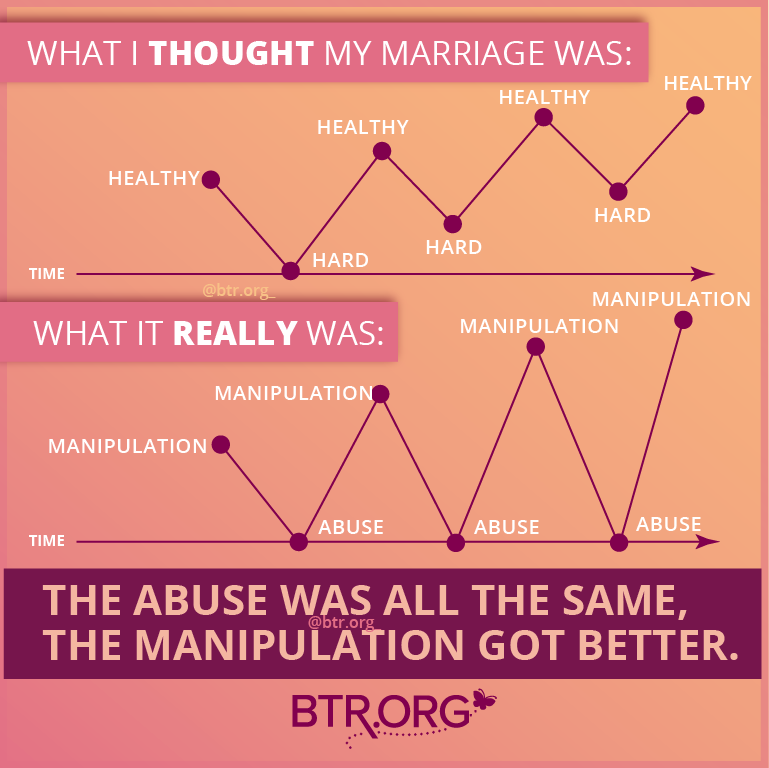
People often told me, “marriage is hard work”, when I tried to explain the confusion, fear, and emotional exhaustion I was experiencing in my marriage. I kept wondering: is every marriage really this way? I had nothing to compare it to. Especially when even couples who seemed happy said marriage is hard.
If your marriage is hard work all the time, you may be dealing with something other than the “normal” hard work of marriage. Take our free emotional abuse test to find out.
DOES THE HARD WORK OF MARRIAGE INVOLVE THESE 5 THINGS?
If the hard work you’re talking about involves these 6 things, it’s likely there’s something else going on:
1. IS CONFUSION PART OF MARRIAGE IS HARD WORK?
Confusion is often one of the first signs that what you’re experiencing is not just “normal” relationship stress. Of course, every marriage has its ups and downs and its misunderstandings, but confusion is usually not a through line in a normal marriage.
What’s worse is that when women try to describe what’s happening to friends, family, or counselors, they might give us basic relationship advice, or even just healthy living advice, because they don’t see the overall patterns.
2. ARE YOU SEARCHING FOR EXPERT HELP OVER AND OVER AGAIN?
If your marriage keeps sending you to another therapist, clergy member, recovery program, or another book, that is not necessarily a sign that you are failing.
Women experiencing hidden emotional and psychological abuse often seek help because they are willing to learn, change, and work hard. The problem is that many professionals are not emotional abuse experts, so the help they offer may not address the real issue. Pay attention to who is doing all the hard work and who isn’t.
3. DO YOU NEED A “DIAGNOSIS” IF MARRIAGE IS HARD WORK?
If your marriage is hard work and you’ve been searching for help, your search may have resulted in incorrect diagnosis after incorrect diagnosis of the problem. You may have been told your husband is an addict, or he has a personality disorder, or he’s struggling from his traumatic childhood.
Maybe he has “anger management issues.”
Those explanations can sound compassionate and believable, especially when women are desperate to understand what is happening so they can save their marriage. But does their husband’s “diagnosis and treatment” keep women in proximity to harmful behavior longer?
4. DOES THE HARD WORK OF MARRIAGE INVOLVE DESPAIR?
The hard work of marriage might involve despair if it’s about your kids, or if it’s a shared despair because your husband has cancer or someone gets in an accident. But if it’s the type of despair that comes when you can’t seem to solve basic problems, like “Why can’t we communicate?” Or “Why is he always getting mad at me?” That’s something different.
Despair sets in when they do everything that smart women do to resolve issues in their marriage, but the help they received led them down a path of thinking they were a part of the problem instead of correctly identifying their husband’s patterns as emotional and psychological abuse.
5. SHOULD I EDUCATE MY HUSBAND ABOUT BASIC HUMAN DECENCY?
When women learn about emotional and psychological abuse, maybe from my podcast, or somewhere else, they often think, Maybe if I explain it clearly enough, he’ll finally understand. Maybe if I use the right words, send the right article, play the right podcast episode, or describe how much pain I’m in, he’ll stop.
But most women aren’t trying to teach their husbands some complicated, mysterious relationship concept. They’re trying to educate him on things he should already know by now: don’t lie, don’t manipulate, don’t intimidate, don’t blame your wife for your choices, don’t use her faith against her, don’t punish her for having feelings, don’t betray her, and then expect her to comfort you.
Key Takeaways from this Interview:
- The importance of telling the whole truth about his “recovery”
- The good and bad news about knowing it’s emotional abuse
- The impact of a husband’s chronic patterns of deceit
- How professionals blame victims and disregard their emotional safety
- Creating boundaries for emotional safety with him and others
TRANSCRIPT: IF MARRIAGE IS HARD WORK, LOOK AT THE PATTERNS
Anne: Welcome to Betrayal Trauma Recovery, this is Anne. We have a member of our community on today’s episode. We’re going to call her Lynn. Welcome, Lynn.
Lynn: Hi. Good to be here.
Anne: Lynn was in one of my Betrayal Trauma Recovery Q&A group sessions, and as she shared what she was going through, it reminded me a lot of my story. So Lynn, you ended up reading my book. What did you think of it?
Lynn: I just wanna burst out and say, I loved your book.
First of all, I loved the format because it painted the picture of patterns and how these patterns are really universal. While at the same time, instances are so specific and unique to each person. And I think that’s an element of what I experienced that kept me in the dark. Just thinking that all marriage is hard work.
I was married to Chuck number one for 18 years and we have five children together. And Chuck number two and I have been married for five and a half years. I’ve been grappling with this. How on earth did I end up here? Because the specifics were so different. Zoom out a little bit. The patterns are the same. You illustrated that so beautifully in the book.
Anne: Or horrifically.
Lynn: Yes! Yes, horrifically. I couldn’t wait to get to the next section and watch it unfold.
LEARNING ABOUT EMOTIONAL ABUSE FROM SURVIVOR’S STORIES
Lynn: And every time I would get a little feeling inside of “Oh, but not me.” And yet, as the next part would unfold, it’d be like, “Oh, yes, me.” Layer after layer, each chapter, I would find again, oh, actually these patterns are the same. And it was so validating. One of the biggest things that I just kept feeling the whole time, and especially at the end, was, I want to get this book in the hands of everyone I know.
And I want my church leaders to read it. I want my family to read it. I want other women who are in the dark or don’t know they’re in the dark. Because they are thinking marriage is hard work.
That’s what I walked away feeling like. I think the book works so well, because it used a lot of symbolic teaching. And that allows so much depth and detail to be communicated in a simple way. But the horrific part is that it’s not a lovely experience. It’s abuse, which is vile.
I’m also feeling empathy, because I feel like I know what that feels like. How painful and hurtful, because I’ve been there in my own story.
Anne: You’ve heard my podcast. And you’ve been to BTR Group Sessions, you’ve been in Q&As with me. Were you surprised about my story? I’ve never told all of it in one place. It’s just been in tiny parts, like here and there.
Lynn: Yeah, actually I thought that I knew you. I’ve heard bits and pieces over the years, and you referenced sort of your past experience in the sexual addiction world.
THE IMPORTANCE OF TELLING THE WHOLE STORY
Anne: So you saw me back in the day when I was doing public speaking. That is crazy!
Lynn: Yes, yes. I didn’t see you in person.
Anne: But you saw me online.
Lynn: Yes, I was involved in different groups and I had seen videos and I remember hearing, I think a podcast, like the church had a podcast back then.
Anne: Yes, it was huge, that got millions of listens.
Lynn: Wow.
Anne: When I discovered what really happened, I contacted them and requested that they remove it and they did, which was great.
Lynn: I had seen Chuck’s blog linked, and I remember seeing when it disappeared and going, huh.
Anne: No, it’s just some people witnessed this with their own eyeballs. I thought it was a public total downfall, and it just felt so embarrassing.
Lynn: My own experiences with this, and especially with my ex, I had my own assumptions. However, when you don’t know the full story, it’s mind blowing, and yet it’s not. Because I have my own Chuck. I’m like, of course. But at the same time, it was shocking.
The depth, like the layers of the onion that were unpeeling, even towards the end of the book. And you look back to previous incidents from the beginning and detail out oh, this is more likely what was happening. It’s just man, the deception. And just thinking that marriage is hard work.
WHEN YOUR HUSBAND “SOUNDS” AMAZING, BUT MARRIAGE IS HARD WORK
Anne: My ex and I, when we were married, were on a really big podcast with our church, so if you heard that. You know, or at least maybe remember, have an inkling of how good he sounded.
Lynn: Oh yeah.
Anne: He got up in front of people and spoke and sounded amazing. When I’m writing it all out, it was like, what? To myself, it was like, I can’t believe this actually happened like this. But when you’re in it you really can’t tell. You can’t see what’s happening, because you’re taking one moment at a time, one day at a time, one week at a time, rather than the whole thing in view.
If you know what patterns to look for, I hope I lay those out really well. Then you can start seeing them in real time. But if you’re not educated about it, how would you know?
Lynn: Yeah, exactly. I would’ve said, oh, he was the model recovery example. I could see everyone going, oh, I wish my husbands were just like, you know? But why is my marriage is hard work?
Anne: I’m guessing you were thinking, oh, if I just do this recovery stuff, then we’ll improve like them. Is that what you were thinking at the time?
Lynn: For sure, yeah. At that time, I definitely was deeply involved in my own recovery work with specialists, group therapies, individual therapies, joint sessions and 12-Steps and all of that.
Anne: So much stuff.
Lynn: So much, when you look back.
THE TRUTH WAS THAT HIS “RECOVERY” WAS NOT A SUCCESS
Anne: Well, and that’s why I started podcasting. So when I quit all that stuff, when I realized what was happening. I was like, I have to tell the rest of the story. That was the thing that kept coming to my mind. I was like, I have to tell the rest of this story. If I stop now, and people are like, where did she go and why aren’t they speaking anymore?
And they don’t know the rest of the story. That is like leaving a lie that I didn’t know I was living hanging out there. People will think that all the couple therapy or addiction recovery worked for us.
There’s a section of the book that I say, “I think therapists think it works because when a couple leaves them, they don’t know what happens next. They don’t know the rest of the story. And if it didn’t work, the couple is not gonna go back to that therapist because they think, “Oh, that therapist just wasn’t working for us, or that particular type of therapy wasn’t working for us.”
And so it’s pretty rare that a therapist is like, “Oh, that was not a success story” after somebody leaves, because most people aren’t public about what happens to them.
That was the part that I was like, we have to tell the rest of the story. And that’s what I hear every day at BTR, is the rest of the story. People like you who went through that.
THE GOOD AND BAD NEWS ABOUT KNOWING IT’S ABUSE
Lynn: There’s this misconception that because we didn’t continue that work, that is the reason why the marriage failed or things didn’t improve. If we had kept that or tried another therapist, even though we’d gone to several. At some point, I walked away. I did have an individual therapist.
I’ll never forget one day talking about something and then reflecting to my therapist, saying, “My gosh, I sound like I’m an abused woman” or something. Like, why do I sound so crazy? I was judging myself for sounding this way.
And she was like, “Yes, you do.” Like for good reason.
I was feeling so lost, depressed, anxious, and it was like a weight. You think it would be the opposite. Like being told you’re an abusive relationship, but it was more like, oh, I was already feeling all the effects of the abuse, the pain and confusion, not knowing what’s causing the feeling that something is off because my marriage is hard work.
Anne: Especially if you’ve been to years and years of therapy and no one has told you this. It’s not good news, but it’s also not bad news. It’s this weird middle place because if someone tells you it’s abuse, that’s good.
But the problem is if it’s in conjunction with your husband and you’re going to couple therapy or addiction recovery with him, then the next step would be, okay, It’s emotional abuse, it’s psychological abuse. So now let’s get you some help for your emotional and psychological abuse, which is also not going to go very well in general.
The likelihood of someone identifying it as abuse and then him being like, well now I’m gonna change, is slim to none.
MARRIAGE IS HARD WORK, THE WORKSHOP WAS A POWERFUL TOOL
Anne: But I’ve interviewed so many women who go that route. They’re like, okay, now that I know what it is, now that I know it’s emotional and psychological abuse, now we can get him help for that.
I just don’t think people understand the depth of the patterns of lying. Let’s talk about that for a minute. So the book is about intimate deception, it’s about lying. Did you expect it to take that hyper-focus on lying, and why lying itself is domestic abuse? And not that marriage is hard work.
Lynn: Hmm, I have a mixed answer on that. I think that I have the benefit of having BTR in my life. It gives me the heads up where it wasn’t shocking. However, it wouldn’t have been how I imagined you were telling your story.
I couldn’t help but connect the book to your Clarity After Betrayal Workshop. The workshop was a powerful tool for me.
I had been attending your groups because I knew I needed support from other women who got it. There was an email that talked about your workshop. And I thought, I’ll understand the lingo better and probably gel more with your groups if I do your workshop.
And so I grabbed it. So glad, so glad I did. It took bits and pieces that I knew almost subconsciously, and cut past all that mental fog that happens when you’re in an abusive relationship. It spoke to me in a way that hit where I needed it. And it gave clarity so fast. Even before changing behavior, just feeling that in my body, that truth. Man, it made a difference.
THIS IS WHAT I NEEDED TO PUT THE PUZZLE PIECES IN PLACE
Lynn: Like the anxiety lowered. It was like, whoosh, not like I don’t still have hard things, but I’m not exaggerating. When there’s truth that resonates with what my body was feeling. It was like, oh, my body could just breathe. And I didn’t need anyone outside of me to tell me, this is what is happening. Marriage is hard work when your husband is lying.
Anne: With the workshop and maybe with the book too. I feel like this, and of course, I wrote the thing, so maybe that’s why I feel this way. It’s two pieces of the puzzle, but they fit perfectly together. And this is something you already knew. And so when you read it or watch the videos in the workshop, you’re like, this is it. This is what I’ve needed.
And then at the same exact time, it’s so radically different than what anybody else says. In the book, I take women through the lies he’ll tell, and they’re really simple. Even stuff about his own childhood trauma or his shame, or anything like that.
Literally no therapist on the planet, if he says that is gonna be like, that’s just a lie. You’re just lying. They’re never gonna say that. I’ve never heard a therapist say that. I’ve never experienced that. They’re all like, okay, tell me more about your shame. Instead of being like, “Oh, you’re still lying.”
It’s like the light bulb, the aha moments are going off because it’s not like someone has said, he’s just lying about that before.
Lynn: To be frank, that was my favorite part of the book.
HOW SURVIVORS’ STORIES VALIDATED MY EXPERIENCE
Lynn: One of my biggest frustrations is that I have to be careful how I say this, because therapy has been a good thing and it’s also been very damaging. I’ve had more than one experience with different effects.
I feel like I sound like a broken record, but I just keep saying the word validating to feel like all the things that I knew in my core that I wanted something outside of me to validate. There it was right there in the book, and it’s not just one person’s story, it’s bits of pieces of all these other stories woven in.
It gave it strength. That element surprised me, because one woman’s story should be enough. At the same time, there is strength in numbers, and I felt that one woman’s story was powerful, and it didn’t need anything else to validate it because it was one story that anchored. It was throughout the whole book.
Each of these bits and pieces of other women’s voices sprinkled throughout were just reminders that each one of these women also has a story. And each knows that marriage is hard work when there is abuse.
Anne: Right, before I wrote the book, I re-listened to all the podcast interviews, which helped give me that overview of the patterns. But also over the years, the BTR team has helped over 8,000 women thrive after betrayal. This is the only thing we do, and we only focus on this, and because I’ve talked to so many women, those patterns are so clear.
MARRIAGE IS HARD WORK IF THERE’S A CHRONIC PATTERN OF DECEIT
Anne: Because they usually talk to me in an hour, they tell me the before what happened in the middle and then what happened later. And so that broad overview with so many people enabled me to see those patterns and teach those patterns. It’s disheartening to know that they can be so clear if you know what you’re looking for, but they aren’t clear if you can’t see it. Marriage can be hard work. All of us went through that where we couldn’t see it.
With the current situation that you’re in and my focus on lies, has it helped you see the lies happening now with the process of your divorce?
Lynn: Yes, hundred percent, yes. In fact, the phrase that kept coming to my mind was that there is a chronic pattern of deceit. When I’ve shared bits and pieces more recently with people close to me, it’s that reminder of how shocking it is when you speak it out loud and they’re like, “Whoa, wait, what?”
But without even putting each of those stories out there, I always felt like the most harmful action was this chronic pattern of deceit. That’s it. I had a church leader a few months back that asked me, “Have you ever tried telling him exactly what you want? Because he’s just saying, ‘I just don’t know what she wants, I just want to save the marriage.’ “
Yes, I’ve done it in writing. Yes, I’ve bullet pointed, yes, I’ve done all the things. Well, maybe if you just dumb it down, keep it to five things or less, and just try that. Just almost for fun, let’s let you church leader see what this exercise looks like.
HE LIED TO ME BECAUSE HE KNEW IT WAS WRONG
Lynn: I felt like maybe this will help him see and illustrate. Look, I can be really logical. I can say plainly and clearly what I need. And item number one is honesty. I want that.
Anne: It’s so basic.
Lynn: Yeah.
Anne: You’re literally saying stuff a kindergartner should have learned. Of course, he knows this. Because if he didn’t know it was wrong, like if you wanna say, he doesn’t cheat on me, use pornography, gamble, or whatever the thing is you wanna say. Of course he knew it was wrong, otherwise he wouldn’t have lied about it.
Lynn: Yes, exactly.
Anne: Someone who doesn’t know it’s wrong doesn’t lie. So you don’t have to spell it out for them. If they lied about it, they already knew. And I’m not trying to throw all therapy under the bus by any means. I’m just saying having a therapist try to work with him to help him figure out oh, he just didn’t know this was wrong.
That cannot be true. Because if it was, he never would’ve lied about it. He would’ve been like, oh yeah, I was out soliciting prostitutes the other night. I had a really good time.
Lynn: Right, right.
Anne: What? Oh, you think that’s wrong? Oh, I’m so sorry. I didn’t know that. I didn’t know that. Oh, we must have been raised differently, right? I mean, that’s what he would’ve said. He wouldn’t have lied about it. Marriage is hard work with a liar.
HIS DECEIT IS THE MOST DAMAGING PART
Lynn: Right, and that whole idea, which is illustrated in your book, was so empowering. I can laugh about it. It’s a horrific thing we’re talking about, and it’s so absurd. That’s where the laughter comes from, is the absurdity of how that dynamic plays out, and who gets involved with supporting that dynamic.
That is what is so damaging in the different supports and therapies that aren’t supportive, because it’s just reinforcing this idea that marriage is hard work. That the lying and the deceit is not that big a deal. When it is THE big deal. It’s the biggest deal. It was consistently the thing that caused the most harm and damage.
Because it literally was to my psyche, you are led to believe that you can’t even trust your own self and what you are experiencing, that’s pretty severe. That definitely had the biggest impact on me, of all the things I experienced and the different types of abuse I’ve experienced that is the most damaging and harmful, and so I appreciated that that was the emphasis in your book.
Anne: The main pattern I saw in my story, which I lay out repeatedly, is how he would create a fight about nothing. I didn’t do anything wrong, but he would say I did something wrong so that he could stomp out of the house and do whatever he was doing at night that he didn’t want me to know about.
Or he could lock himself in his office and use pornography, and say, “I just need space from you.” and make it my fault. So we’re going to therapy, and that’s the thing that’s really hard. You’re going for help, you’re trying to get help, and they’re like pulling you more into the dark.
MARRIAGE IS HARD WORK, I WAS TOLD I WAS CAUSING HIS EPISODES
Anne: It takes longer. Did you see anything like that after you read the book? You were like, that is what was happening? That thing that I thought we were always fighting about didn’t even exist. He just wanted to do this other thing that I never realized.
The other part I wanna bring up is when he acted like nothing happened. So when marriage is hard work, that pattern is so fascinating to me, because you’ve been in a big fight and the next day you’re like, why is he acting like nothing happened?
So you think, what is his problem? He is spending all his energy focused on acting like the thing we don’t know about didn’t happen?
Lynn: Yes, I loved that part of the book because that was impactful for me.
The fact that what I had been through with my first was so horrific, and there were some extreme situations that were unique. Towards the end, he was diagnosed with severe mental illness. It was alarming, and yet it made sense. And then that sort of became the focus and reason.
Then we had this psychiatrist calling me in to meet and discuss his diagnosis and treatment, which was one of the most traumatizing events. Because I thought, I’m going to go in here as his wife. I’m gonna learn more about the illness. We’ll learn how to handle this together. Of course, the first thing I did was join every support group for spouses of people with this illness. And instead, I was told I needed to share a bed with him, that I was causing him to have episodes.
FEELING HORRIFIED BY PROFESSIONAL ADVICE
Lynn: And that despite what he’d done to me in our bed, and telling me that he couldn’t keep himself from doing that, but he says he’s not gonna do it again. And you are destroying my work with him and my treatment for him.
Anne: Oh. Wow!
Lynn: I walked out of that office feeling horrified and shaking. But just knowing this is not right. I don’t know what’s right, but it’s not this. Later, he worked with another psychiatrist and told me, he said, “I wanna go back and make things right. I wanna get better treatment. I want your help. However, I lied about you so much to my first psychiatrist that there’s no way I’ll get good help. He really believes you’re the problem and there’s no way I can undo everything that I’ve done. So I need to start fresh with a new psychiatrist.”
Anne: Wait, was that a lie because then maybe the old one maybe was onto him a little bit and he wanted a new one.
Lynn: Honestly, that definitely has crossed my mind. There are so many layers.
He did start with a new psychiatrist and had me go in with him fresh the first time. And this psychiatrist told me, this is great. Actually, with this illness, that’s one of the best scenarios we could have that there’s an invested family member who really cares. Because often they can’t convey a perspective outside of their limited view that marriage is hard work.
I GET TO DECIDE WHAT MAKES ME FEEL SAFE, NOT MY HUSBAND
Lynn: Man, it got so messy. After maybe three or four marriage therapists, including two sex addiction specialists. At this point, I don’t think this therapist was perfect, and there were certainly many things he did not understand. He did key in on emotional safety needs to be here first, period. And telling my husband, “You don’t get to decide what her safety is. She decides.”
And my husband was dumbfounded by that and angry at first. She doesn’t feel safe, something’s wrong with her. And having to be told no, she gets to decide what makes her feel safe. So couples therapy under that premise is not appropriate right now. When you’re trying to decide if you want to stay together after infidelity.
Safety is in place first. And both of you need to feel that way. So she’s not feeling that way. It doesn’t matter how ready you believe you are.
Anne: Right.
Lynn: And so that led to me taking enough space and distance. And what happened when he started with that new psychiatrist, I was able to give some feedback. And they made some medication changes, and they definitely had an impact.
It was, wow, I’m seeing a glimmer of who I thought I married. What’s so complicated was it wasn’t just a mental illness. I was trying to figure that out still. I had been so deeply entrenched in the sex addiction recovery world that it was like they were merging. And I was like, well, there’s this overlap. And it’s sort of abusive behavior, but that’s just an addict brain. Oh, actually also sometimes it’s mental illness.
MARRIAGE IS HARD WORK, IF HE’S USING FEAR TO CONTROL YOU
Lynn: Well, mental illness made him act out in these sexual ways. Now there’s this new framework to blame for the behavior. And in the background throughout the marriage, there were physical incidents. I didn’t recognize them, because in my mind, he wasn’t punching me. I didn’t have marks.
I’ll never forget the first time an incident happened in our marriage, I thought marriage is hard work, but this is something else. He slammed me against the wall with his hands on either side of my head, terrified. And it was almost like everything around was blurry. I just see him in my face screaming, and I couldn’t even hear what he was saying.
It was almost like an out-of-body experience. I just remember thinking, is this abuse? I don’t think this is abuse. Maybe it is, is it gonna get worse? When do I ask for help? I can’t imagine my father ever doing anything like this. Do women experience things like this? This whole flood of thoughts and questions, it wrapped up in this bubble of fear.
It set the tone for other incidents. When you talked about the punching holes, exactly how you described that. That was so perfect. I experienced that exact thing, and my husband was also an attorney. We moved a lot from apartment to apartment, and different condos, townhouses and whatnot.
And every single place we lived he punched a hole in a wall or in a door or something and some sort of damage. And it would stay there like this ominous reminder.
Anne: A reminder, a threat,
Lynn: Stay in line,
Anne: Yeah.

My HUSBAND KNEW WHAT HE WAS DOING
Lynn: Until we moved, and then, the day before we’re moving, he’s patching it up and everything’s fine now, and then the next place we go sure enough.
Anne: That example is interesting, because it shows how in control he was, as opposed to a mental illness. I’m not saying he didn’t have a mental illness. What I’m saying is if his mental illness caused the hole punching. Wouldn’t there be a ton of holes?
Like why that one hole? And then he left it there the whole time and patched it before you moved. Then the same pattern right when you moved in, there’s a hole in the wall, that’s the threat. And then no more holes until you move. And then he patches it up. Why isn’t he punching holes in the wall at his work, at church, at Walmart?
Lynn: Exactly.
Anne: The other thing about mental illness is that doesn’t explain the lying.
Lynn: Yes.
Anne: You can have someone who’s schizophrenic, who genuinely tells the truth. Maybe they’re seeing things, but they’re not going to be lying to make themselves look better.
They’re like, “Oh my word, this person’s talking to me.” It’s not gonna be a controlled narrative that makes them look better to other people. It’s going to be specific stories about what they’re experiencing, and they’re gonna sound crazy.
Lynn: Yeah.
Anne: Because they’re mentally ill. These guys don’t sound crazy.
HE USED HIS DIAGNOSIS TO MANIPULATE ME
Lynn: I love how you can see right through it and hit right to the point. It took me so much time to come to that understanding and circle it back around to the book. I think that’s where a tool like this would’ve been monumental. It would’ve been helpful for me.
Eventually, I did get there, but it would’ve been a really powerful tool for me just because I eventually came to those truths that you so quickly pointed out just instantly right now. That point of the story where it was like he had a high stress job, he was a litigator, he would be in trials for weeks somewhere. Why wasn’t this happening in a hotel room or in the office, or any of these other places, when marriage is hard work?
Anne: Yeah, why wasn’t he running out into the hallway saying, “I’m hearing things, there’s somebody in my room.” That would be the manifestation of a mental illness. Many of the women I’ve talked to, and maybe you feel this way. Once they realize, wait a minute, and they reprocess it.
They’re like, I don’t even think he was ever mentally ill. He just rode that train as long as he could, and used it to exploit me and do all this stuff. And they’re in shock that a therapist didn’t recognize that the diagnosis itself was used to manipulate her. And that it wasn’t like, I don’t wanna say real, ’cause I don’t really know, but these women are saying he wasn’t mentally ill.
I interviewed A. S. King, who said he did this for years, and later she said something about him being mentally ill, and he said, “I’m not mentally ill, I’ve never been mentally ill.”
MARRIAGE IS HARD WORK, WHEN HE REFRAMES THE STORIES
Lynn: I have had a roller coaster with that. While he worked with that psychiatrist. We ended up getting in a horrible car accident, our whole family. They had to split us to different hospitals, because we had a large family and had to go to the trauma unit.
Anne: That sounds horrible. I’m so sorry.
Lynn: It was funny, it was traumatizing, and I felt like all the trauma work I had done with sex addiction therapy. I was like, I’m prepared for this. I have those tools because marriage is hard work with an addict.
All the addict behaviors are going on still, and I’m feeling crazy. But the mental illness thing, there are so many times where I questioned, and I felt like he’s totally bluffing me.
Like he’s totally using this. And there are times when he can’t control it, but it’s pretty obvious when he can’t control it. And there are so many times it’s a front. To your point about how he would respond, man, that part is so confusing for me to this day, because like I said, we have been married 18 years.
16 years into it when this mental illness finally started being diagnosed. I just remember him getting treatment and coming home and saying to me, like, the voice has finally stopped. Like I’ve had voices since I was a kid. They’re finally quiet. And I was looking at him like, like you’ve never mentioned this to me ever. If you’re aware enough to talk about it and recognize that it was a voice, not you, why have you never said a word?
And then he would take incidents that happened and reframe them.
I CREATED BOUNDARIES TO PROTECT MY CHILDREN FROM HIS RAGE
Lynn: Like a night where I picked up a daughter from an activity, I left the other kid’s home with the baby. When I had left, I think the baby had a dirty diaper. And I came back and there was still a dirty diaper. I think it was my daughter who made a comment about this dirty diaper, And he became immediately enraged and started attacking me that I had somehow thrown him under the bus for not changing the diaper, and turned it into one of these types of arguments, and stormed off out the front door dramatically.
And the kids are all shaken up, and it wasn’t a one-time incident. They would happen throughout the year. The whole therapy route was like, what did you say to anger him? How did you show disrespect? What was happening at the time? What led up to it that week?
Anne: Just think about it. If he was an honest, good person? Wouldn’t he have said, you know what, I’m really concerned. I’m hearing these voices. I’m worried, I’m scared. When marriage is hard work, I’m overwhelmed.
Lynn: That was the part that became so confusing. Exactly, yes. Towards the end of that, we had created these boundaries, and essentially, if this happens, you take off, you’re not to just come home in the night. And he came home in the middle of the night, slamming things around, screaming at me. And the next day nothing happened.
I FELT SCARED FOR HIM TO COME HOME
Lynn: I’m going to the church thing, and we’re going clean. And I just was like, “No, this is crazy. Something big happened. I can’t pretend like that was normal, I’m done. We can’t keep doing that.” I didn’t know what I was going to do, but not that.
And he took off in a rage again. I’m sitting there at home, eventually I put my kids to bed that night, and the texting starts and he’s gonna come home. Darn it, I can’t keep him from his home. Even though we agreed on the boundary. He was coming home, and I just felt scared. I didn’t know what he was going to do, but I didn’t trust him.
I just felt like, get out now. That’s all I knew. And pulled my kids out of bed, packed a little overnight bag, and drove off to my parents about an hour and a half away in the night. And I never returned. I didn’t know that I was not returning, I thought, I don’t know what’s wrong. I don’t know what is going on with him, but I can’t do that. And it took me eight months to say, okay, divorce,
I lived in this limbo of, it’s the mental illness. If just gets that under control, if he just gets this under control. If it’s an illness and I’m just abandoning him. I need to support him in his illness.
I just grappled with all that confusion, and because I didn’t have BTR at that point. The closest thing I had was to call the domestic violence hotline. I’m trying to explain to him how I have a question about this one thing, and it’s not an abuse problem because X, Y, Z.
MARRIAGE IS HARD WORK, IT’S STILL ABUSE IF HE IS MENTALLY ILL
Lynn: The big thing being, he has mental illness, and then trying to explain to me it doesn’t matter what the reason is, what’s happening is still real. It’s still abuse, and that’s what you need to focus on. That marriage is hard work when you are married to an abuser. He may be denying his abuse.
Anne: Which is the crazy part about the therapists. So say he has a mental illness, and you’re like, yes, he has a mental illness. Okay, that doesn’t make it not abuse. The things they say to you need to be like, okay, he has a mental illness and you’re being abused. So if he’s gonna get treatment, he needs to come in on his own, or it’s not gonna work. You need to say no to abuse.
So I need you to not call me ever again or see me ever again. And we’ll see if he comes back, and good luck to you. Maybe go to the domestic violence shelter. That’s what they should say. Or read this book or listen to Anne’s podcast or something like that. They don’t say it. They explain all the reasons why his behavior is happening, without saying what is happening.
It’s that he’s emotionally and psychologically abusive. And if he wants to get help for these things, he will need to come on his own by himself. And you should not be involved in any way, shape, or form, because you are his victim, and that is not ethical.
I went through seven years. I had several therapists, you went through multiple therapists. And they don’t say this. That’s the thing that is like crazy pants to me. One call to Domestic Violence Services, and they’re like, nope, this is abuse.
I CALLED THE DOMESTIC VIOLENCE HOTLINE
Anne: The difference in what they tell you to do and how to move forward is like night and day. And to the abuse specialists, like me now, as opposed to the Addiction Recovery specialists, like I was at one point. The thing to say is like completely different, and it should be consistent across both, and it should be from that domestic abuse standpoint for everyone, including teenagers trying to avoid abuse.
But unfortunately, the therapists aren’t trained that way. They’re trained to help him with his mental illness. They’re not trained to help a victim of abuse or his victim of abuse. If he’s going to get help with his mental illness, it’s a conflict of interest to treat him for that, and also his victim of abuse at the same time. Not because marriage is hard work.
Lynn: A hundred percent. And that brings me back to both your book and your workshop. Because when I think about that experience, the first time I called the domestic violence hotline. It was so jarring. It connects to that image of the light.
Where it’s blinding and gives you a headache, and it’s disorienting and you’re seeing spots for a minute. Like you can’t really even see, that’s how it felt at first. Like whoa, what is happening?
Anne: Especially when you’re contrasting that to the fact that you’ve been going to therapy for years and they’ve never said it. You’ve had the experience of going to therapy, and they’ve been talking about it a certain way and approaching it a certain way. And then talk to a domestic abuse specialist, and it’s so drastically different, that’s why it’s so jarring. ‘Cause you’re like, why is this the first time I hear about this?
NOT GOING BACK AFTER YEARS OF SEEKING HELP
Anne: When I’ve been trying to get help 10 years, for 15 years?
Lynn: Yes. That just sums it up perfectly. And it’s interesting. It took me a little bit to get on board, because it was so jarring, because it was so disorienting, just thinking marriage is hard work.
Anne: Yeah.
Lynn: Which of course once you adjust, you can see so much more clearly. And it’s a warm, safe and comfortable place. It wasn’t that it was bad. At first it felt like, oh my gosh, this is bad. And I was a little afraid. Once I adjusted, it was like, oh my gosh, this is so much better. I cannot go back into that cave now. Now there is no way in heck anyone could bribe me with anything in the world to go back in that cave.
I don’t know what I’m gonna do out here in the light, but I’m not going back in that cave. I sat in that place for a while until I eventually got to my next steps and moved forward.
These stories need to be told. And I’m so glad you found a way to tell it. There’s no way someone could capture those symbolic elements that you expressed without having firsthand knowledge of having walked through the trenches yourself.
And I appreciate that you found a way to share your story, because I had bits and pieces that I gleaned through podcasts and other elements. There’s something powerful about a story.
There were definitely parts where I was literally grinning, definitely chuckled a few times. Especially the way you wrote about your experiences and having been married to an attorney with many similar behaviors, like some of it was word for word.
MARRIAGE IS HARD WORK WHEN THE TRUTH IS HARD TO BELIEVE
Lynn: The way that, especially the communications post divorce, just had me laughing how specific.
Anne: There’s one part that a lot of people have told me. They laughed out loud. It was where scripture was like, and he was sore in his loins, but his wife had to work late.
Lynn: Sorry.
Anne: So then God was like, yes, you must spread your sperm somewhere. And so adultery is good in this case. Like little things like that.
Lynn: Yeah, sorry I didn’t mean to laugh over you. Yes, sometimes I say sarcasm is my love language, so that struck a chord with me for sure. Little bits of that sprinkled throughout, it’s so important, I think, as part of this journey. The absurdity of what we experience, the chronic pattern of deceit, the depth of lies that no one could possibly understand unless they’ve lived it. You have to laugh to keep your own sanity, because it’s so mind blowing. Marriage is hard work with an abuser.
Anne: There’s this part in Stranger Things, I think it’s in season three, where they go to see that guy that speaks Russian, and they tell him what is going on. And he’s like, “Okay, I believe you, but that’s too much. We are gonna need to dumb this down.”
And then when they go to the news, they say it was a chemical leak, not the upside down and a monster. And I cut out so much from the book that I kind of felt that way at times. Sometimes people accuse us of over exaggerating, but if we’re doing anything, we’re under exaggerating. They wouldn’t believe us if we told every detail. Like the guy in Stranger Things.
VICTIMS OFTEN UNDER EXAGGERATE ABOUT THE ABUSE
Anne: So we automatically, through years of being victim blamed, through years of people wondering what our part was. We naturally did that anyway, because it seems more believable.
But I just want anyone listening to know that if anything, you’ve been under exaggerating, not the other way around. So if people are like, you’re exaggerating, you don’t have to say, no, I’m not. But you can think in your mind, if anything, it’s way worse than what I’m describing. I think that hopefully helps women feel better if they’ve ever been accused of exaggerating. Or thinking marriage is hard work.
Lynn: I think what’s really interesting for me right now, especially as I read your book. I think I talked more about my previous relationship, which, like I said, had some extreme behaviors. And like you also said, I didn’t even scratch the surface on all that I experienced with him. But it is the second relationship, which was so much harder to catch the patterns, and these resources have been a lifeline.
He is the good guy. He is the calm guy. The pattern of deceit is so deep, so chronic, and I thought I had found my safe guy and the good guy. And yet, I have experienced the most horrendous psychological abuse I have ever experienced in my life. It was resulting in physical problems that I couldn’t figure out. And I’ve gone to different doctors and specialists. Because of what I went through, he had the perfect finger to point. You’re just traumatized from your past, and that really stifled me.
Anne: I think I even say that in my book. That’s also a lie.
STRUGGLING WITH FAITH BECAUSE OF EMOTIONAL ABUSE
Lynn: Yes, that was a part of your book that spoke to my core. Because it has been a big piece of my feeling trapped, feeling crazy, feeling completely buried.
The tools that I was able to anchor to through BTR, through your workshop, through your groups, and reinforcing things by listening to your podcast and through your book, gave me so much strength, so much clarity.
It’s not like any of this made me choose divorce. In fact, it didn’t at all. What it made me choose was prioritizing my mental, emotional, spiritual, psychological, physical safety. And in turn, my children, because this all affected them, and prioritizing that has resulted in this marriage ending.
I don’t think it had to. I think any woman can choose to be strong and healthy and have a good marriage.. It seems like I was getting outside messages telling me, to stay married, you must sacrifice all these things. I don’t believe that’s true.
Anne: That’s essentially saying you have to tolerate abuse in order to stay married.
Lynn: Exactly, that’s exactly how I feel. I have struggled with my faith because of what I’ve been through. It has really shaken me. I’ve bounced back and forth with feeling like I need to step away, and also feeling like this is actually something I treasure personally.
I’ve received great strength from my faith. Even when I felt more unsure, I didn’t want to feel like that was pushed out and that I couldn’t have that. I wanted to decide and feel like I can know for myself whether I want this or not.
THOSE WHO HAVE TWISTED THINGS IN MY FAITH, MARRIAGE IS HARD WORK
Lynn: My personal experience with that part of your book was really positive, because that’s the path I felt like I’ve journeyed. I’m trying to just re-navigate what that looks like within this space of healing and acknowledging the abuse, rather than just marriage is hard work. Acknowledging how people mishandled things within that context of my religion.
I work with different faith leaders. And even the spiritual abuse from my husband and how he twisted things. That part is so confusing. What I liked about your book is that element is there. It felt like you could take it or leave it if you wanted. It’s just a part of your story.
But it also helped me connect my feelings with that faith and even part of that worship. Knowing that not everyone who shares those things near and dear to me sees it the same way as those who had twisted those things. That’s a distortion. It’s not necessarily what Christ wants us to get out of that message.
Anne: It’s fine with me wherever anyone lands, if they decide, hey, you know what, I have to step away from my faith, or I’m not gonna practice anymore, or whatever, anything is good.
I happen to choose my faith still. And I put all the reasons for that in my book, with all my ways of interpreting things that have helped me maintain my faith through all this. I wanna be in this middle spot where I don’t push anybody in any direction. If somebody wants to keep their faith, they can keep it if they don’t want to, nothing that I say will be spiritual abuse where I’m trying to coerce them to stay faithful or something.
THE BOOK HELPED ME REFRAME
Anne: I wanna be very neutral on that front, while also sharing my own experience. And how I processed all of it and how I continue to process it with everyone already thinking usually marriage is hard work.
Lynn: Yeah, exactly. That part of the book was perfect for me, because it helped me reframe, helped me take back what I wanted from my faith.
Anne: Well, Lynn, thank you so much for sharing part of your story. Thank you for reading my book. Thank you for relating how you felt about it. I’m so grateful that you’re part of our community.
Because it’s women like you that enable me to continue to do this job. Without clients, I wouldn’t be here still. So thank you so much. I’m so grateful that you found my stuff and that it was useful to you.
Lynn: Me too, thanks Anne.
Anne: Thank you.


Trying to heal from his hidden abuse. It’s the worst.
oh my! Where do I begin? BTR.ORG is an awesome educational read for me. I guess I am never realized that a healthy marriage wouldn’t require the work of becoming educated about abuse.
My husband of 30yrs is an addict and I just found it out 11 months ago from a best friend that called and told me my husband and she had been messaging for 7-8 months to the point she lost her job talking to him so much. She said it got so nasty and degrading that she so ashamed and had to tell me.
I think that took so much courage for her to do and because she did I now understand that what I thought was just an awesome life at 53yrs old was just a lie. And then she exposed him and it’s been a living in HELL ever since!
I’ve been an emotional wreck, I no longer feel pretty or even longer for by my husband, his affairs with younger women have had me arrested for cyber stalking when I confronted one regarding an affair with my husband. I then lost my job, health coverage for our whole house (me hubby and 3 daughters) for not much a month to cover us all, I list friends and family, my self worth and I hurt physically all over my body.
My mother died in 3yrs at only 66yo from cancer, then my father died 1 1/2 yrs later and then I have pretty lost husband whom I thought was my best friend BFF but turns out to be my worst enemy! I can’t begin to describe what I am going through, but I can tell you I feel no love from anyone. I am completely ignored now, with barely any acknowledgement that I’m alive much less shown any empathy remorse or compassion for my feelings and devastation of my life.
So please keep posting and informing about this! I have to reached to all these “advocates” that are supposed to be there to help but there is no one to help financially get out and pay Lawyers. I have had thoughts of suicide and other dark thoughts but was raised better than that. But I AM SO SAD AND LONELY AND BROKE!
I have been in an abusive relationship for 5 years, I was with this guy when I was a teenager and the too he was abusive towards me.
I got out when my abuser verbally attacked me in a store with false allegations. We had two daughters. I didn’t know he was cheating with multiple different women when I got pregnant with our third (a son). The emotional abuse was my fault for asking questions. I got pregnant again. I still suffer after all I have tried to do to help him after everything I’ve managed to push to the side and it hurts. Every complaint he has made about me I have strived to correct and fix, all of it but its like nothing works he still disrespects me and now claims I’m no longer worth respect. I’m a total mental wreck!
“drug addicts abuse drugs, alcoholics abuse alcohol, and addicts abuse people. That’s what they abuse. They are abusive in their behaviors. They are abusing other people.”
I agree with this completely! Because these kinds of activities can be hidden (compared to alcohol or drug use that can be witnessed by other people) & deception occurs, those activities (infidelity, online behaviors, masturbation, etc) are incredibly abusive to all persons: the perpetrator, the victims. My husband’s online behaviors are abusive to me, and it feels like nobody understands that. He’s a covert narcissist—he hides it so well from everyone else, but I see it. The lying, the secrecy, the blaming—it’s all part of the abuse. I don’t know why the counseling professionals won’t confront this. It’s like they tiptoe around it instead of calling it what it is.
I don’t know why counselors won’t address this type of emotional or psychological abuse or sexual coercion either. That’s why we started Betrayal Trauma Recovery! I so appreciate your comment!
Hello,
I started listening to your podcast. You have been a life saver. I would tell my ex, “You’re abusing me.” He would say, “no I am not.” I have been learning a lot through your podcast and so many terms. I’m mad that I spent so many years thinking marriage was hard work, only to find out I was just being exploited by an abusive man. I’m so grateful that you’ve helped me see the light.
I’m so glad you found us! I’m so sorry you’re experiencing emotional abuse.
It is a really interesting distinction between emotional and psychological abuse since it’s all hidden abuse. I’m still digesting the abuse part, but notice that my ex husband has evidence of both.
It’s been 2 years since the truth was revealed that he was an online infidelity addict for our entire 34 year marriage. It has been one year since we divorced. I gave him a year to commit to recovery, and we established some benchmarks to allow him to come back home. He was not inclined to do them. We had an amicable divorce, but he continued to manipulate my emotions. We considered reconciliation until I found out he was still engaging in online infidelity so that option was off the table. I can’t help but wonder if he is a psychological abuser as he has not changed his destructive patterns that I noticed during our marriage. He is like a runaway train that jumped the tracks. I am still in the healing process…
Thank you so much for sharing. I’m so glad you found us!
Hi, Such an intelligent comment you obviously treated your husband with kindness and he showed no respect towards you. Your story sounds very similar to mine. I’m trying to be reasonable but feel I can’t get past all the hurt.
Hi, this page has been very helpful to me, for dealing with my divorce, however I was wondering if there is something available which is catered to men. My knowlegde is limited but as the page seems to be aimed at women (which I understand because men and women are different thus have different needs in dealing with abuse), perhaps someone could recommend me a similar page/article which focussed on how men can learn how to recognise and deal with abusive behaviour of their partner.
Paul, thanks for visiting! Yes, this site is specifically for women who have been harmed by men. But, sending you good vibes for your healing nonetheless.
I’m dating a man who started his addiction to online infidelity for 17 years prior to meeting me, but is in recovery now. I don’t think I’ve experienced hidden abuse from him, but maybe I’m kidding myself? I’m trying to educate myself before marriage because I don’t want to end up making a choice I regret. Are all users of online exploitation abusive in some way?
Yes, it’s our view that online exploitation is abusive of people – but also abusing the people around you so you can use through lying, gaslighting, etc. If he does not use exploitative materials anymore in any way shape or form, doesn’t view women as objects, is completely honest, transparent, able to be empathetic, takes you seriously as a person, etc, etc, I would even go so far as to say that he is now a feminist who actively does everything he can to promote the safety of women, then yeah, he’s not abusive. But if he’s still gaslighting, manipulating, lying, then no. If he’s doing that you’re currently being abused. This article may help you: How Do I Know if My Abusive Husband Is Changing?
I’ve been seeking help and everyone tells me, “Oh he’s not that bad. You need to take accountability for YOUR actions.” There’s no true support for emotional abuse. If I was an emotional abuser, I’d have everyone by my side.
I know. We’ve had the same experience. That’s why we started BTR.org. Have you considered joining our daily online support group for victims of emotional abuse?
I found BTR post separation. I had not realized I was dealing with an abusive partner until after he terminated the relationship abruptly.
I felt bullied and thought the way he spoke to me was emotional abuse way back in 2016. But I brushed his bad behaviour under the carpet, ignored red flags.
Forgave him for infidelity believed it was a mid life crises.
When the reality was I was being emotionally and psychologically abused. Manipulated and gaslit.
Awakening happened two weeks after he left. October 2020, that caused me immense trauma.
I desperately need help and I have absolutely no one to turn to, not a single soul to talk to, nothing. I’ve not had a conversation with someone besides him in almost 3 years. Please help me. Please someone tell me I’m real, I’m a person, love exists, my life matters, and that there is a way out for me. I don’t see nor have I seen any of that in years and I’m terrified to my core; terrified to move the wrong way, say the wrong words, to upset him, even just to wake up is terrifying. I don’t see a way out, no one believed me and now I have nothing, no one, not two red cents to rub together. I’m not a person anymore. Idk what to do. I don’t see a way.
Melissa, I see you! There is a way. Believe. There are so many of us who have felt as you do. Believe there is a way. We’re here for you!!!
It is interesting the “two to tango” belief since there are so many books written for businesses that explain how one highly skilled and toxic person can take down a business. They are hired because they are thought to be a star. But soon you learn they are not a team player, divisive, egotistical, and can’t take feedback, etc. So, these books teach you to recognize this and not hire this kind of person no matter how talented.
I think this says a lot about misogyny. The business books were likely written about men for men, protecting men from men. But apparently women (wives) don’t need to protect themselves from their husbands?? She basically hired him, but now she’s never, ever, ever supposed to fire him??
How do you know what is normal? I discovered probably 10 years ago he was looking at things he shouldn’t. When I confronted him, he said it had nothing to do with me and he was getting help. I’m not sure what the help was. Periodically since then I suspected he was still at it. He works in IT so knows how to cover his tracks. He always searches in private mode but once in a while he forgets. I found a search history that had pay sites about five months ago. I didn’t say anything. Last week I found a note on his iPad with saved sites from the last ten years and a month ago being the most recent. I confronted him and got the same story. He loves me, he gave me his iPad, which whatsoever that was symbolic I think.
But now I’m realizing it’s not just this. Over the years, he’s hidden so much from me. He’s shut me out emotionally, made me feel like everything was always my fault if I was upset. He’s charming to everyone else, but with me, I feel like I’m invisible until he needs something. I look back now and see how much of his behavior was controlling or dismissive, and I didn’t even realize it at the time. I’m dying inside and he just goes back to normal life.
I’m at a loss. I don’t want to blow up my whole life, 35 years married, five kids and 10 grandchildren. I listened to some of the podcasts but everything is talked about so generally I don’t know what things should actually look like for healthy. Please post anonymously.
Yeah, it’s really hard to tell. We’ll be updating our Living Free Workshop for married women (right now it’s geared toward separated or divorced women) on October 12. (But the strategies apply no matter what you’re situation) So I’d recommend starting there. btr.org/livingfree
In the meantime, I recommend our daily group sessions or individual sessions to help you sort all of it out. We’re here for you!
My ex husband lies to me about a woman he had been seeing for a while. He tried sleeping with me and when I said no he said he would be trying harder. When I found out three days later this other woman was in his car when they were dropping off my son to his daycare. I called him and told him about it, he gaslight me and said the daycare was wrong and he didn’t know what I was talking about and that it was his guy coworker. This woman doesn’t know he tried sleeping with me with every intent to keep doing it until I found out about this
I’ve been married for 14 years, 2 wonderful daughters. My marriage has been hard work since day 1. Only a year into our marriage my husband cheated (groping and then texting) with one of my close friends. At the same time, I discovered all kinds of hidden things he’d been doing and lies about our finances. I was devastated, but he said it was a mental breakdown and he’d recently recovered memories of past childhood abuse.
So we went to therapy and the therapist was caring but never said his behavior was abusive. He went to recovery groups and his own therapy. He said it was the worst mistake of his life. We did well for a while and he hasn’t cheated again. But over all the years since I’ve discovered so many hidden things he’s been doing and every time he pledges to stop. He’s lied to me over and over about it. He’s also lied about money many times and spends for himself without restraint but questions me on things like Christmas gifts for our kids. Most of our years together have been up and down but with a lot of good times.
Until the past year or so he has become what I’m seeing as emotionally abusive, controlling, paranoid, and intensely angry. I’ve supported him so much despite all his hidden behavior. His mom is now ill with cancer and the stress seems to have pushed him over the edge again. I feel exhausted, have anxiety, just a mess. I feel like the help I seek focuses on how I can “control” my reactions and medicate myself to be less anxious.
As a nurse, I know this is crap. My anxiety is a natural human response to what I’m dealing with. What I need is someone to confront my husband with how wrong his treatment of me is and I don’t know if that will ever happen. All the things that are avoided are exactly what I need! Community pressure on HIM, accountability, and boundaries, support and someone to have my back.
Is it possible to talk to someone first before scheduling an individual session? I have some questions. Thank You!
The best way to talk to our coaches before scheduling an individual session is to meet them in group sessions. Check out the group session schedule.